
Subscribe for more updates!
Get exclusive travel inspiration, private itinerary ideas, and
curated destination guides from LocalHi's travel designers.

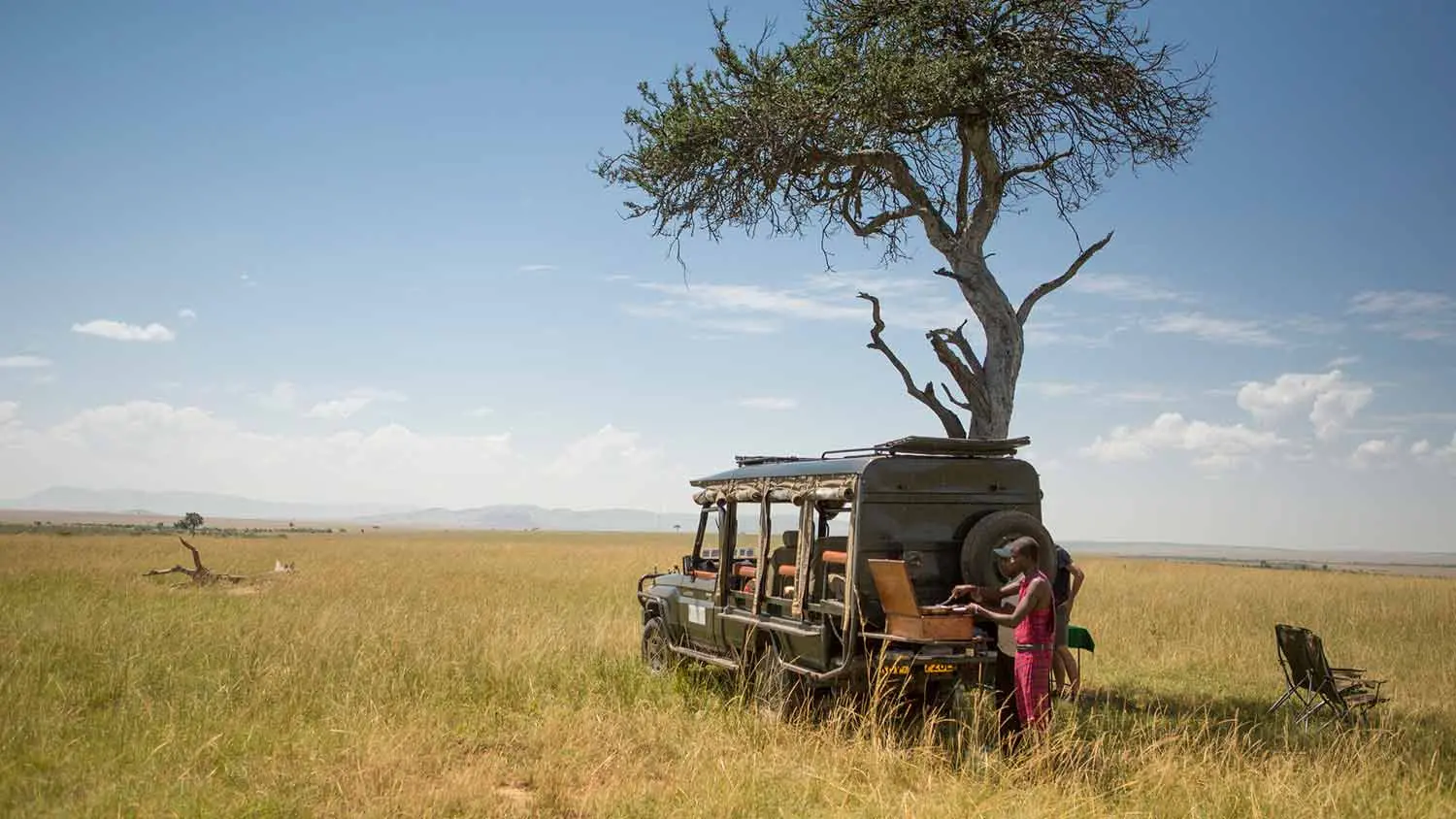
Every July, over 1.5 million wildebeest pour out of Tanzania's Serengeti and head north toward Kenya's Masai Mara. Standing in their way is the Mara River — crocodile-filled, fast-moving, and one of the most dramatic natural spectacles on the planet. The Great Migration runs from July through October, and for those weeks, the Masai Mara becomes the most talked-about wilderness on earth. But here is what most first-time safari travelers miss: where you sleep determines everything. Camp location is not a detail to sort out after flights and visas. It is the single most important decision you will make for this trip. This guide breaks down the 7 best luxury camps in the Masai Mara for Great Migration season — what makes each one worth it, and which one suits you best.
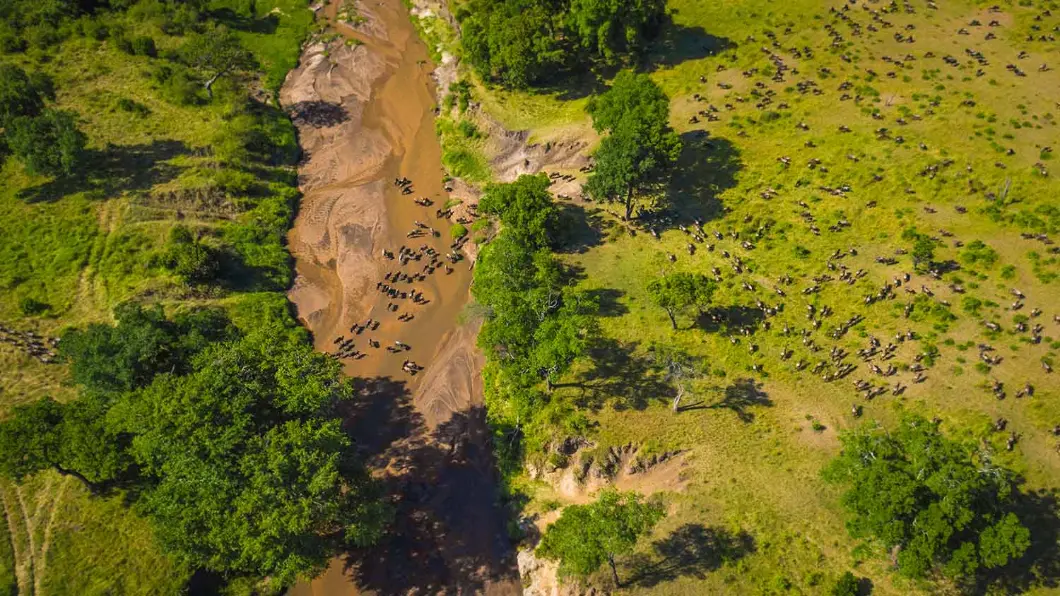
The Great Migration is the largest overland animal movement on earth. Each year, roughly 1.5 million wildebeest, accompanied by hundreds of thousands of zebra and gazelle, follow the rains in a circular route between Tanzania's Serengeti and Kenya's Masai Mara. The Kenyan leg — July through October — is where the drama peaks.
The reason is simple: the Mara River. To complete their migration, the herds must cross it. The crossings are dangerous, unpredictable, and completely chaotic. Crocodiles wait. The banks are steep. Wildebeest panic and surge and occasionally turn back for no visible reason. A crossing can take ten minutes or it can take an entire day to start. Nobody controls the timing.
This unpredictability is exactly what makes camp location so critical. Guests who are camped 150 meters from a crossing point can watch one unfold over breakfast. Guests who are an hour away may miss it entirely. The Great Migration Masai Mara guide covers the movement in more depth if you want a fuller picture of what to expect across the season.
There is also a distinction between Mara River crossings — the main event, dramatic and high-stakes — and Sand River crossings in the southern Mara, which are shallower and gentler but offer the unique advantage of seeing the herds arrive into Kenya first. Both matter. Both belong on this list.
Not every luxury camp in the Masai Mara is well-positioned for the migration. A five-star property 20 kilometers from the nearest crossing point will deliver a beautiful experience, but it may not deliver the migration the way you came here to see it. Here is what separates the standout camps from the rest.
Proximity to active crossing points. The closer the better. Camps within walking distance of a crossing point are in a category of their own. Camps within 30 minutes by vehicle can still intercept crossings effectively if the guiding team is well-connected.
Radio communication networks. The best camps have guides in constant contact with each other and with spotters across the reserve. When a crossing builds, guests are already in position. This matters more than most travelers realize.
Private concession access. Camps located inside private concessions — rather than within the main national reserve — have the legal ability to do night drives and take vehicles off designated tracks. This opens up the migration in ways that standard reserve rules do not allow.
Camp size. Smaller camps mean fewer vehicles at any given sighting and a more personal experience. Intimacy is not just a luxury feature here; it directly affects the quality of what you see and how you see it.
For practical advice on getting the most out of a Masai Mara safari, the Masai Mara wildlife safari tips guide is worth reading before you book.
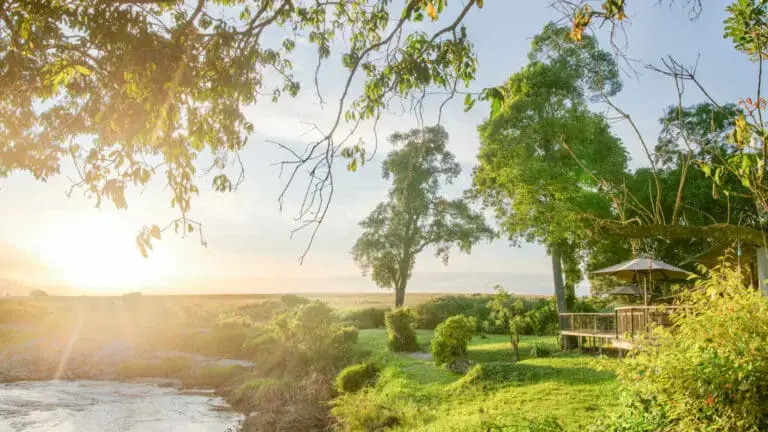
If you want the most privileged position in the Masai Mara for the Great Migration, Rekero Camp is difficult to beat. This nine-tent property, run by Asilia Africa, sits 150 meters from an active Talek River crossing point. That is not a marketing line — it is a literal measurement that changes how you experience the migration entirely.
During peak migration months, guests at Rekero have watched crossings unfold from the camp's dining deck. No vehicles, no dust, no hour-long drives. The herds build up on the far bank, the crocodiles congregate, and you sit with your coffee and watch. It is the kind of access that makes every other migration experience feel like a compromise.
The camp itself is understated and deliberately small. Nine tents means nine families or groups maximum. Guiding is personalized, and because the camp is so close to the water, guides can read crossing behavior and position guests before most other camps even know something is building.
Rekero is not the most architecturally dramatic camp on this list, but it does not need to be. The river is the spectacle. Everything about the camp is designed to connect you to it.
Best for: Guests who want the migration to come to them, not the other way around.
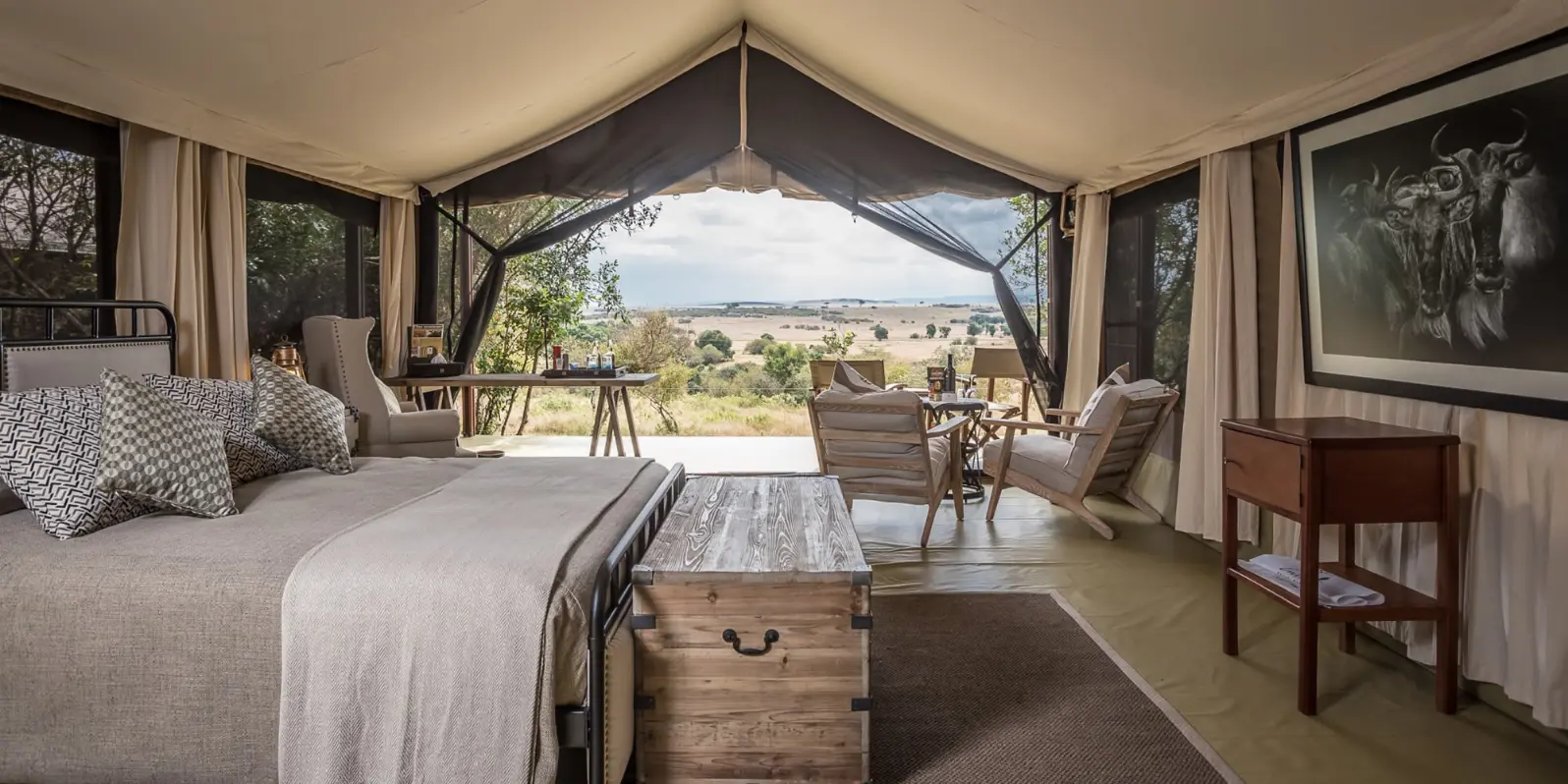
Entim Camp takes a similar philosophy to Rekero and scales it across twelve tents. The camp faces the Mara River directly, positioned at an active crossing point. Guests have watched full river crossings from their tent verandas, which is a sentence that never gets less extraordinary no matter how many times you read it.
What sets Entim apart beyond its location is the in-house photography studio, which during migration season becomes one of the most genuinely useful camp amenities you will encounter anywhere in East Africa. If you are traveling with camera equipment, or if you want to come home with images that look professional, the studio access and the photography-aware guiding here make a real difference.
The camp design leans into its setting — open, river-facing, with most communal spaces oriented toward the water rather than inward. The twelve-tent size keeps things personal. This is a camp where you will recognize the same faces at breakfast and compare what you each saw at the crossing that morning.
Entim also benefits from strong guiding with experienced naturalists who know the Mara River's crossing behavior well enough to give guests meaningful advance notice when a build-up is developing.
Best for: Photography enthusiasts and guests who want river views from their tent, not just from a vehicle.
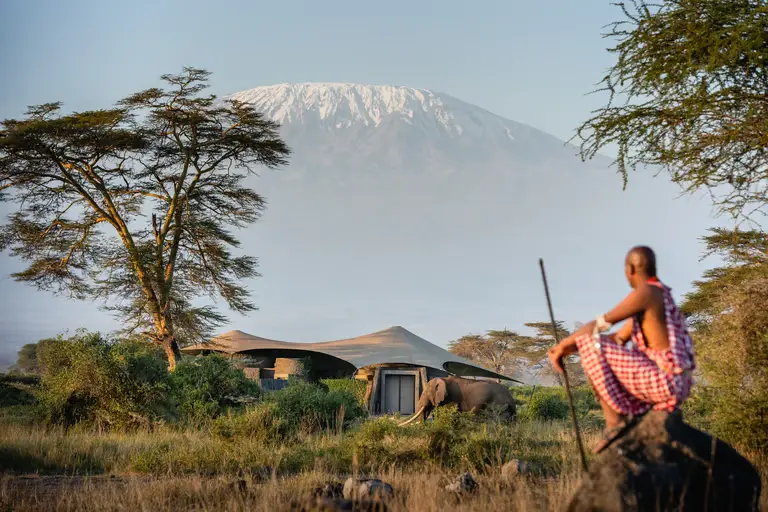
Angama Mara operates on a completely different logic from the riverside camps. Rather than putting you next to the migration, it puts you above it. The camp sits 1,000 feet above the Mara Triangle on the Oloololo Escarpment, and from that height, the entire ecosystem unfolds below like a living map.
There are two separate camps, each with 15 glass-fronted suites. The architecture is genuinely striking, designed to frame the view rather than compete with it. During migration season, the wildebeest herds congregate on the plains directly below the escarpment. Watching the movement of hundreds of thousands of animals from that elevation is an experience with no equivalent in standard safari lodging.
The main Mara River crossing sites are about 45 minutes away, which might sound like a disadvantage. In practice, Angama has solved this with one of the most efficient guide radio networks in the Mara. When crossing activity builds, guests are alerted and vehicles are already moving. The camp's elevated position also means guides can often see the migration behavior on the plains before the herds have even reached the river, giving positioning a real strategic edge.
Angama also runs a notable photography program with dedicated photo vehicles and professional workshops during peak season, as well as a community-focused approach to conservation that is worth reading about before you visit.
Best for: Guests who want panoramic views of the migration as a whole, combined with efficient access to the crossings.
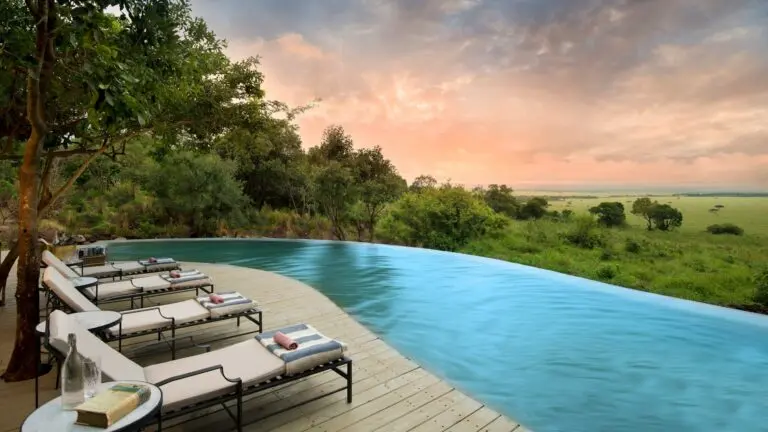
andBeyond Bateleur Camp is one of the most historically significant properties in the Masai Mara. The final scene of Out of Africa was filmed at the spot directly above the camp. The aesthetic leans into that legacy without being precious about it — vintage canvas, copper bathtubs, personal butlers, and an atmosphere that feels genuinely earned rather than manufactured.
The camp sits at the base of the Oloololo Escarpment in a private concession, which is the critical detail. That private concession status unlocks night drives, off-road vehicle access, and a level of flexibility in the field that standard national reserve rules simply do not allow. During migration season, this means guides can position vehicles off-track when a crossing is building or maneuver to a better angle without the constraints that other camps face.
Eighteen suites spread across the concession gives Bateleur a good balance between scale and intimacy. The camp is located directly in the migration path, meaning herds move through the property itself during peak season. Driving times to the main Mara River crossing sites run about 20 to 30 minutes — close enough to respond quickly, distant enough to offer the escarpment landscape as a secondary draw.
The private concession also effectively means fewer competing vehicles at any sighting. For guests who find the standard reserve experience frustrating when multiple safari vehicles crowd a crossing, Bateleur's concession access is a meaningful upgrade.
Best for: Guests who want off-road and night drive flexibility combined with strong migration corridor access. Also worth it purely for the history. Explore more of what Kenya has to offer beyond the Mara.
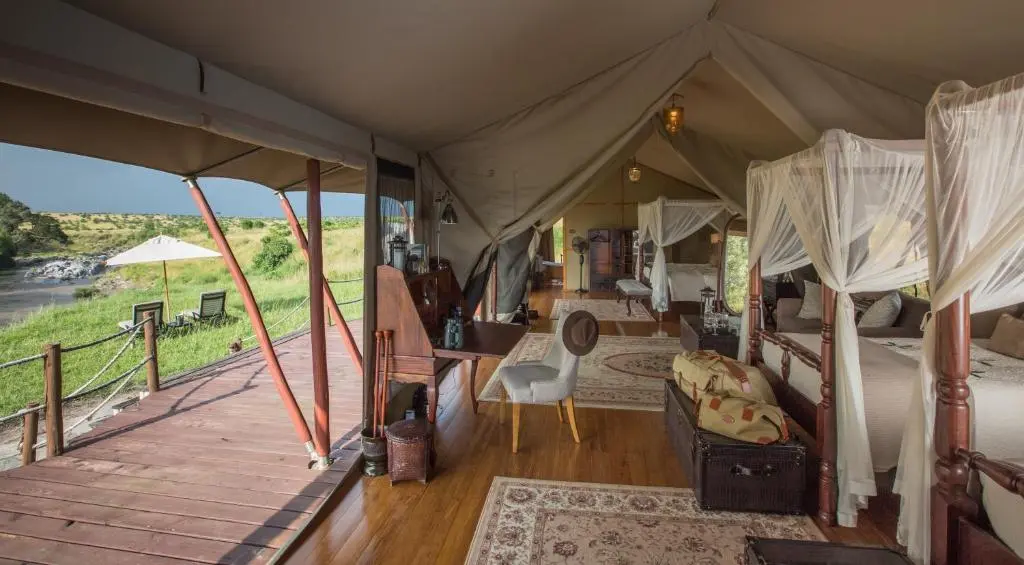
Sand River Masai Mara, operated by Elewana Collection, occupies a unique position on this list. Its sixteen tented suites sit in the southern Mara near the Tanzania border, in the 1920s East African safari style that Elewana does consistently well. The aesthetics are warm, textured, and unhurried.
The strategic value here is timing. Because of its southern position, Sand River is among the very first camps in Kenya to encounter the migration as it crosses from the Serengeti. The wildebeest cross the shallow Sand River right past camp. These crossings are less dramatic than the main Mara River crossings further north — no sheer banks, fewer crocodiles, less of the panic-and-surge spectacle. What they offer instead is something rarer: the migration arriving. The herds coming into Kenya, still organized, still moving with purpose. For guests who have done the Mara River crossings before and want a different angle, this is a compelling alternative.
For guests coming from India, the experience of watching the migration emerge from the direction of the Serengeti — knowing what they have traveled through to get here — adds a particular kind of depth to the sighting. The Masai Mara Kenya safari guide for Indian travelers has more context on planning the Kenya leg as a whole.
Best for: Travelers who want to be first to see the migration entering Kenya, and those who prefer the southern Mara's quieter, less-trafficked character.
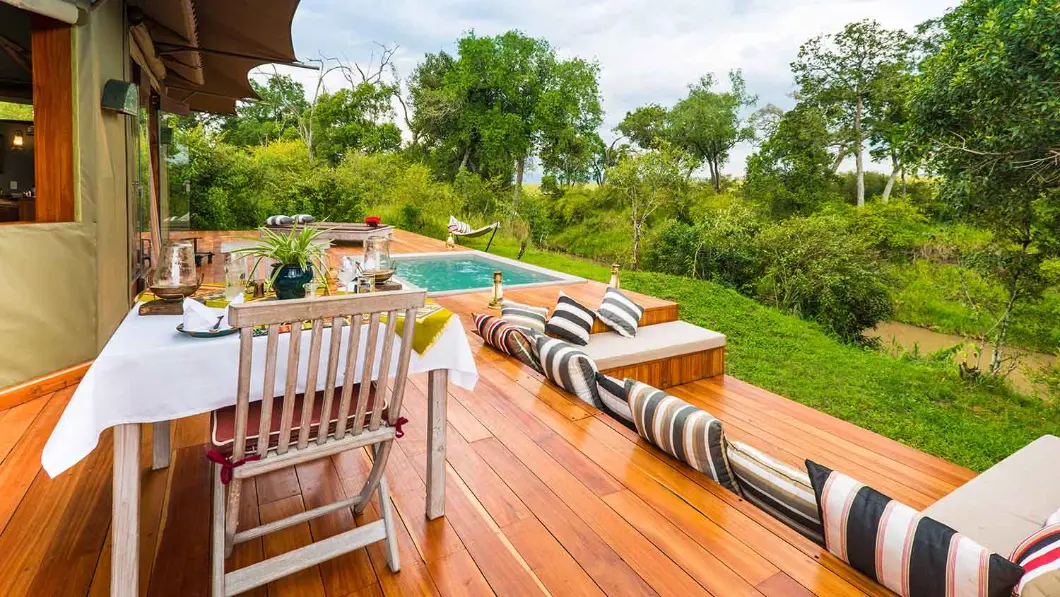
Seven tents. That is Sala's Camp. Seven tents at the confluence of the Sand and Keekorok Rivers in the southern Mara, with views that look straight out toward the Serengeti plains. The camp made Conde Nast's Top 15 in Central and East Africa in 2024, which tells you everything you need to know about what it delivers at that scale.
Every tent at Sala's has a private plunge pool. The combination of those river views, the plunge pools, and the sheer smallness of the camp creates an experience that is difficult to replicate. You are not sharing this with 30 other guests. You are sharing it with at most a dozen. Guides know your name, your interests, and your camera settings by day two.
The southern Mara positioning means Sala's shares Sand River's advantage of seeing the migration arrive early. The main Mara River crossing points are about an hour's drive — the furthest from those sites on this list. For guests who prioritize intimacy and the early-arrival experience over proximity to the main crossings, that trade-off makes sense. For guests who specifically want to be close to the Mara River drama, it is worth weighing honestly.
The camp is also well-placed for predator sightings year-round, which means even outside peak migration weeks, Sala's guests are rarely watching empty plains.
Best for: Travelers who want the smallest, most exclusive footprint possible in the Masai Mara, with the southern migration angle as a bonus.
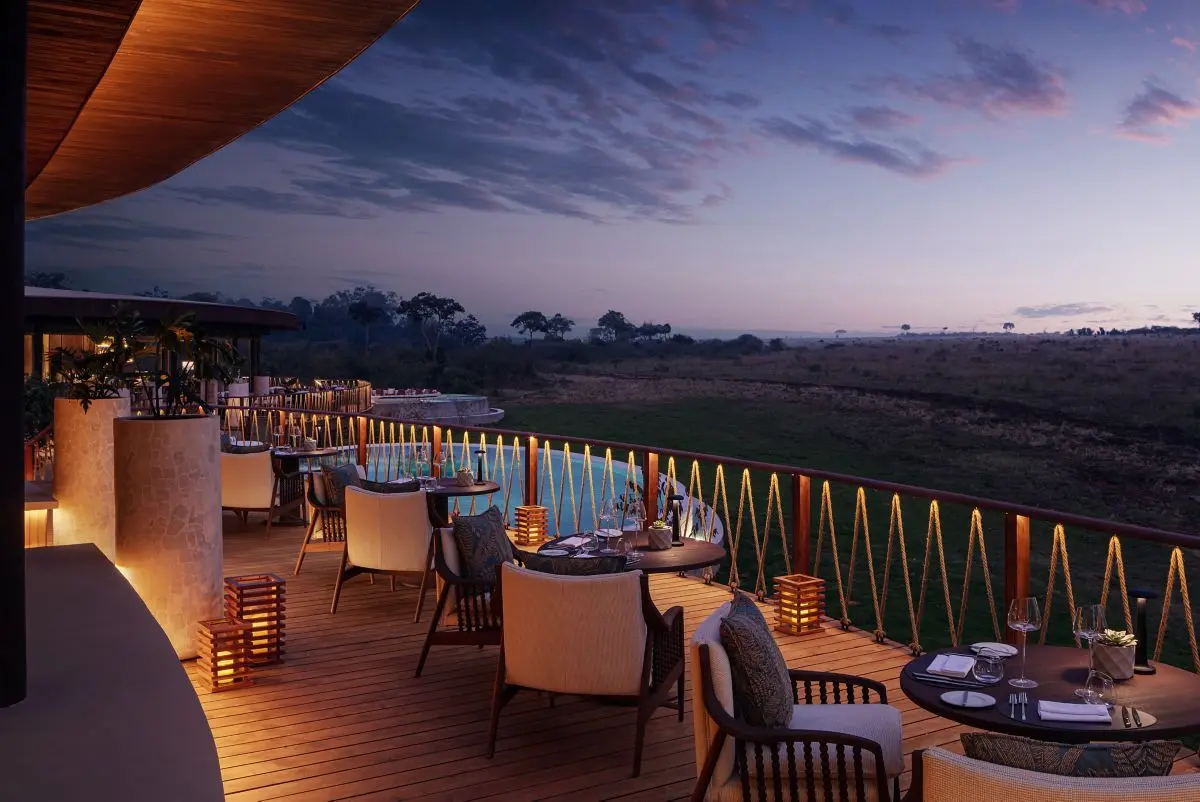
The Ritz-Carlton Masai Mara opened in August 2025 and immediately became the most talked-about new property in the region. It is the first international luxury hotel brand to establish a presence in the Mara, and it arrived with exactly the infrastructure that suggests.
Twenty suites sit on the Sand River near the Kenya-Tanzania border, each with a private plunge pool and dedicated butler service. The camp is fully solar-powered. Rates start at $3,500 per person per night, making it the highest-priced entry on this list by a significant margin.
What you get for that is the Ritz-Carlton service architecture applied to a wilderness context — the consistency, the pre-arrival customization, the attention to detail at the level of brand promise. The camp sits on the migration corridor, and the Sand River is an active wildlife gathering point throughout the season, which means even guests who do not drive to the main crossings will have sightings from camp.
It is worth being straightforward about the trade-off: the Ritz-Carlton delivers the most polished hospitality product here, but it is the newest camp and has had the least time to develop the deep field experience and guiding culture that some of the longer-established properties carry. For travelers who value brand consistency and want the international luxury hotel experience transplanted into the Mara, it is unmatched. For guests who prioritize seasoned guiding above all else, the older camps on this list may have an edge.
Best for: Travelers who want the full international luxury hotel experience in the wilderness, combined with migration corridor access and the Sand River setting.
Visit The Ritz-Carlton Masai Mara
With seven strong options, the decision comes down to a few honest questions.
How important is river proximity to you? If watching a crossing from camp or within minutes of driving is your priority, Rekero and Entim are the answers. If you are comfortable with 20 to 45 minutes of driving in exchange for a different kind of setting, the escarpment and concession camps open up.
Do you want off-road and night drive access? If yes, andBeyond Bateleur Camp in a private concession is your clearest route to that flexibility. This matters most for guests who want to track predators in the evening or position vehicles without track restrictions.
Are you interested in the migration's arrival, or the main crossings? Southern Mara camps like Sand River, Sala's, and The Ritz-Carlton let you see the herds entering Kenya first. Northern and central camps like Rekero, Entim, and Angama put you closer to the peak Mara River crossing drama.
What is your group size and how much do you value exclusivity? Sala's seven tents and Rekero's nine set the standard for intimacy. The Ritz-Carlton's 20 suites and Entim's 12 offer a slightly larger footprint without losing the boutique feel. Angama, with 30 suites across two camps, is the largest on the list.
If budget comparison is part of your planning, the Masai Mara budget safari guide provides a useful frame for understanding the full price range in the Mara.
The short answer: book well before June if you want any of the camps on this list for July, August, or September.
Migration season is the single most in-demand period in the Masai Mara, and luxury camps with fewer than 20 suites fill up fast. The camps with the most privileged positions — Rekero, Entim, Sala's — are often fully committed by March or April for peak migration dates.
The migration itself is not fixed to a precise calendar. The herds follow the rains, and timing varies by weeks from year to year. The Mara River crossing activity is most concentrated between late July and October, with August and September typically delivering the highest frequency of crossings. That said, early July arrivals and late October departures can both deliver exceptional sightings, and they come with the advantage of slightly lighter camp occupancy.
For a shorter trip that still delivers migration-season access, the Masai Mara weekend safari guide covers how to make the most of a compressed itinerary.
The Masai Mara is the anchor, but Kenya rewards those who build around it. Two experiences complement the migration particularly well.
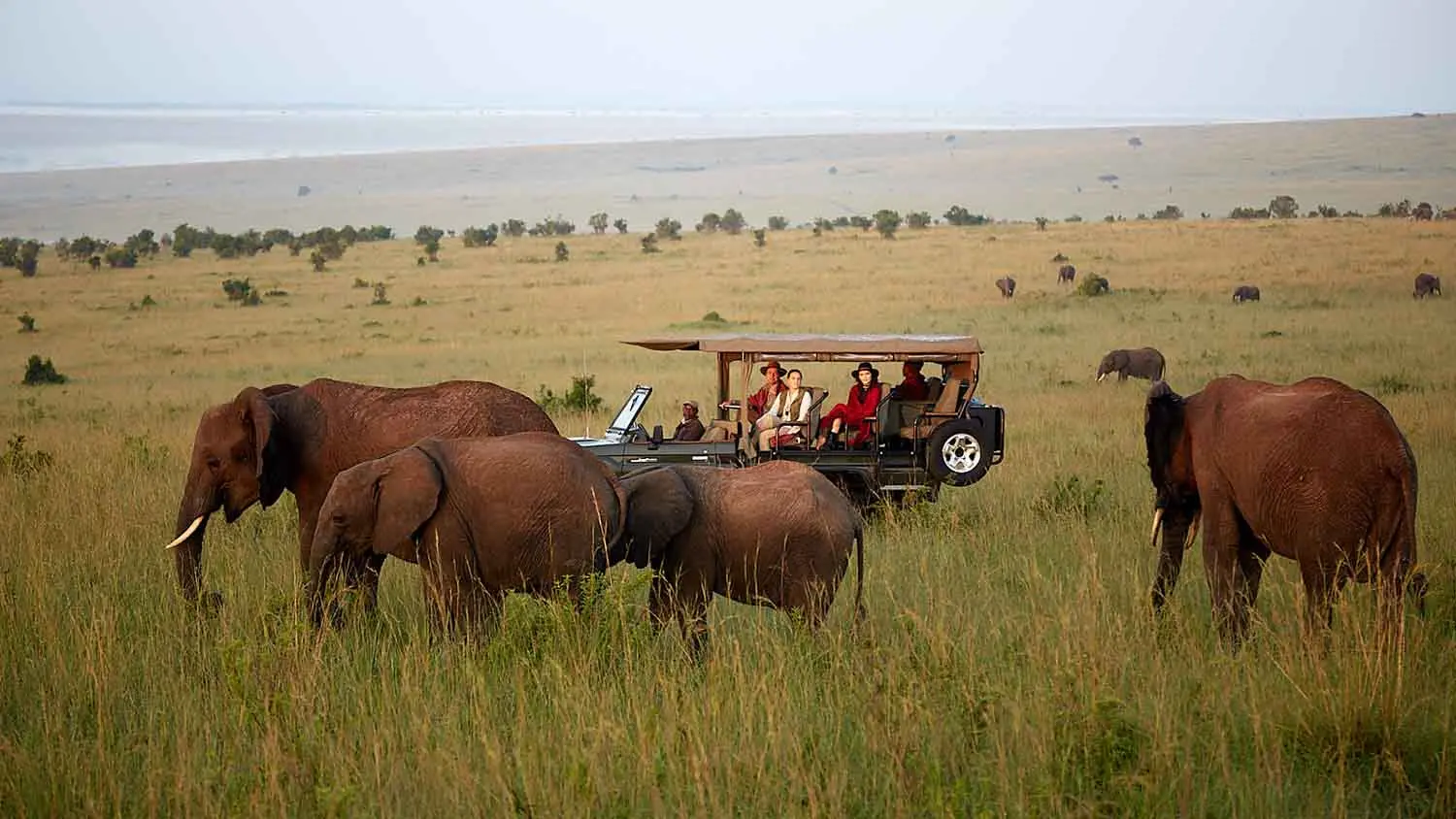
The hot air balloon ride over the Masai Mara is genuinely transformative during migration season. Drifting over the plains at dawn while the herds move below is a completely different perspective from anything you get on the ground. Most balloon operators launch at sunrise, and during July through October, the migration is often visible from the air within minutes of takeoff.
The Great Migration safari experience with LocalHi packages the best of the season with guided itinerary planning built around actual migration movement, not fixed calendar assumptions.
For those extending the trip beyond the Mara, the options are genuinely excellent. Nairobi's Giraffe Centre and Karen Blixen Museum pair well as a day before or after the Mara. Amboseli National Park delivers a completely different safari character, with elephant herds moving beneath Kilimanjaro. And for something truly rare, the gorilla trekking experience at Ol Pejeta Conservancy is unlike anything else Kenya offers. The full Kenya destinations page is worth exploring if you are building a longer itinerary.
What is the best time to see the Great Migration in Masai Mara? July through October is the window, with August and September typically delivering the highest frequency of Mara River crossings. Early July can see the herds arriving, while late October marks the migration beginning to turn south again. Flexibility within the season increases your chances of witnessing a major crossing.
How close should my camp be to the Mara River for good crossing views? Ideally within 30 minutes drive. Rekero and Entim are in a league of their own with direct riverside positions. Camps like Bateleur (20 to 30 minutes) and Angama (45 minutes with radio-networked guides) can still intercept crossings effectively when the guiding team is paying attention. Camps more than an hour away require good timing and some luck.
Are luxury camps better positioned than budget camps for the Great Migration? Not necessarily by price point, but there is a practical connection. The most strategically located camps in the Mara tend to be smaller, more exclusive properties that command premium rates. Private concession camps, which offer the most flexibility in the field, are almost exclusively in the luxury category. That said, location matters more than thread count — a mid-range camp at a crossing point beats a five-star lodge 15 kilometers away.
Can I see the Great Migration from my tent? At select camps, yes. Entim Camp guests have watched crossings from their verandas. Angama guests watch herds move on the plains below the escarpment from their glass-fronted suites. At most camps, you will need a short drive to the nearest viewing point, but the best properties minimize that distance considerably.
What is the difference between Mara River and Sand River crossings? Mara River crossings are the main event. Steep banks, strong current, crocodiles, and the compressed panic of thousands of wildebeest surging across at once. Sand River crossings, in the southern Mara, are shallower and less dramatic but offer a different kind of privilege: seeing the migration arrive into Kenya before it reaches the main river. Both are worth seeing. Both are represented on this list.
Should I choose a camp in a private concession? If night drives and off-road access matter to you, then yes. Private concession camps like andBeyond Bateleur can operate outside the standard reserve rules, which opens up the Mara at dawn and dusk in ways that reserve-based camps cannot match. For guests who want maximum flexibility in the field, the concession advantage is worth paying for.
The seven camps on this list represent the best of what the Masai Mara offers during migration season. Each one earns its place for a different reason, and the right choice depends on what kind of experience you are building toward. River crossings at breakfast, elevated plains views, private concession night drives, or being first to see the herds arrive — none of these is the wrong answer.
What matters is that you book early, choose a position that matches your priorities, and arrive during the right weeks for what you came to see.
The LocalHi team has been in the Mara during migration season and knows how quickly the right dates disappear. Get in touch with us to start planning your Great Migration safari. We will match you with the right camp, the right dates, and a full Kenya itinerary if you want one. Explore all our Kenya experiences to see what else is possible alongside the Mara.
The Great Migration is not a spectacle you observe from a distance — it is something you position yourself inside. The right camp is not a luxury upgrade; it is the foundation of the entire experience. Whether you choose a nine-tent riverside camp where the herds cross 150 meters from your breakfast table, an escarpment lodge looking down on the moving plains, or a private concession where your guide can take you off-track at dusk, these seven properties represent the best decisions you can make for migration season in the Mara. Choose your position carefully. The herds do not wait.
CURATED TOP DESTINATIONS


Subscribe for more updates!
Get exclusive travel inspiration, private itinerary ideas, and
curated destination guides from LocalHi's travel designers.