
Subscribe for more updates!
Get exclusive travel inspiration, private itinerary ideas, and
curated destination guides from LocalHi's travel designers.

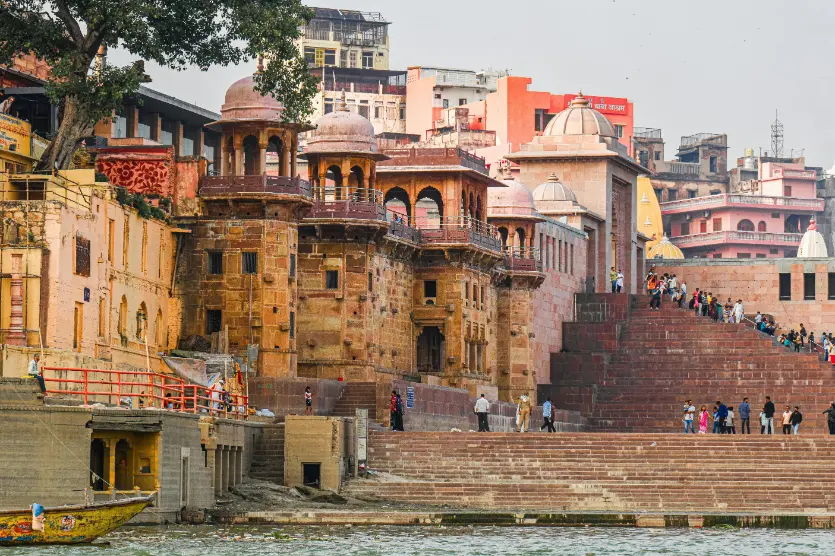
There are cities you visit, and then there are cities that swallow you whole. Varanasi belongs to the second kind. On the banks of the Ganges, life and death unfold side by side, unembarrassed and unhidden. For foreigners who arrive expecting a postcard version of India, the city can be overwhelming. Yet if you allow yourself to settle into its rhythm, the soft oar of a boatman at dawn, the thunder of bells at dusk—you begin to understand why people have been coming here for centuries, seeking something words can’t quite capture.
Varanasi sits alongside Bodh Gaya and Rishikesh as one of India's most powerful spiritual destinations — our guide to cultural etiquette for foreigners in India is a useful read before you arrive.
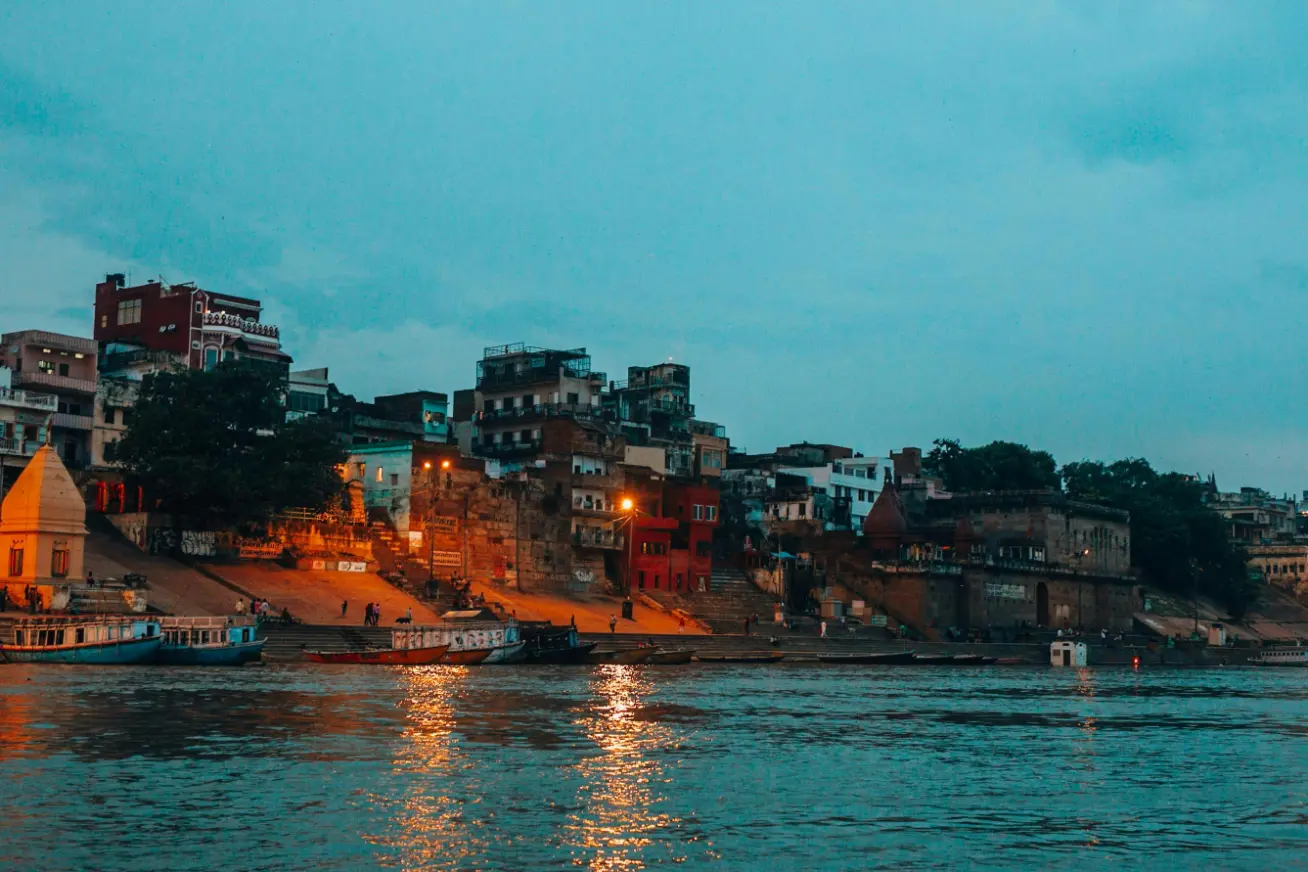
My own introduction to the river came at 5 a.m. The alleys were still dark, cows nosing through rubbish piles, tea vendors setting up clay cups of chai. By the time I reached the ghat, the air had turned hazy pink, and the river stretched out like a mirror. There were pilgrims already waist-deep in the water, chanting as they scooped up handfuls of the Ganga and poured it back, over and over again.
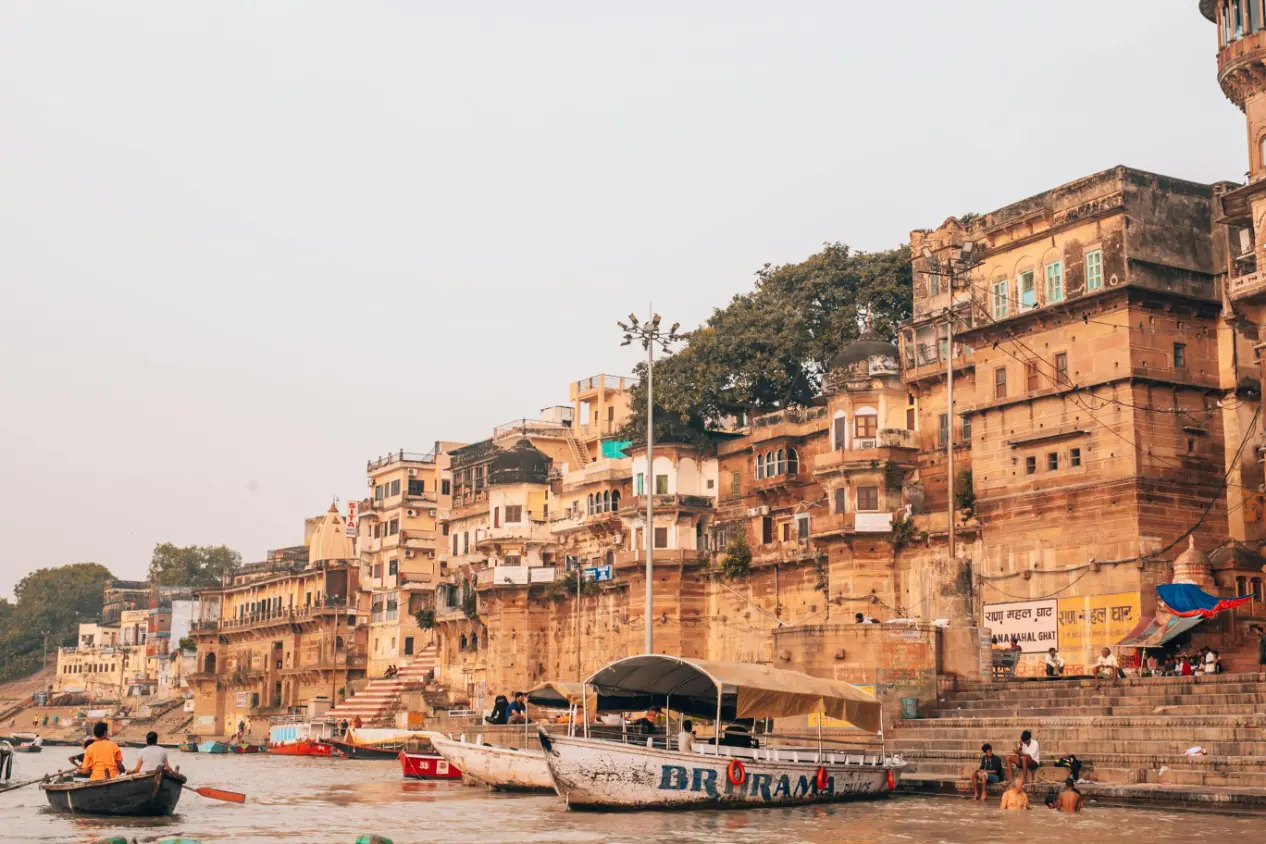
The boatman, a wiry man with a thin scarf wrapped around his head, pushed us away from the stone steps. “This is the hour of the gods,” he said quietly, dipping the oar. The sound was gentle, almost hypnotic. As we floated past the ghats, each one revealed its own story: an old man meditating cross-legged, children chasing each other, a family lighting incense for an ancestor. No two ghats looked or felt the same, and that variety is what stays with you long after.
For luxury travelers, there are curated Varanasi Ganges boat rides that replace the hard wooden benches with upholstered seating, and instead of cheap tea, you’re handed masala chai in porcelain cups. But even with that comfort, the essence is unchanged—the river pulls you in, regardless of whether you’re sitting on a simple rowboat or a heritage craft.
There’s no avoiding the intensity of Manikarnika Ghat, where funeral pyres burn day and night. The flames rise against the backdrop of temples, and you can smell the smoke before you see it. For many visitors, it’s a shock. But for locals, it’s a reminder: death here is not hidden or sanitized. It is part of the continuum.
Standing there, you begin to realize why travelers call Varanasi transformative. It’s not a comfortable transformation; it unsettles you, forces you to look at what you often avoid. Yet, by the time you leave, the experience feels strangely comforting. The Ganges doesn’t just carry ashes; it carries a philosophy—that everything flows, everything continues.
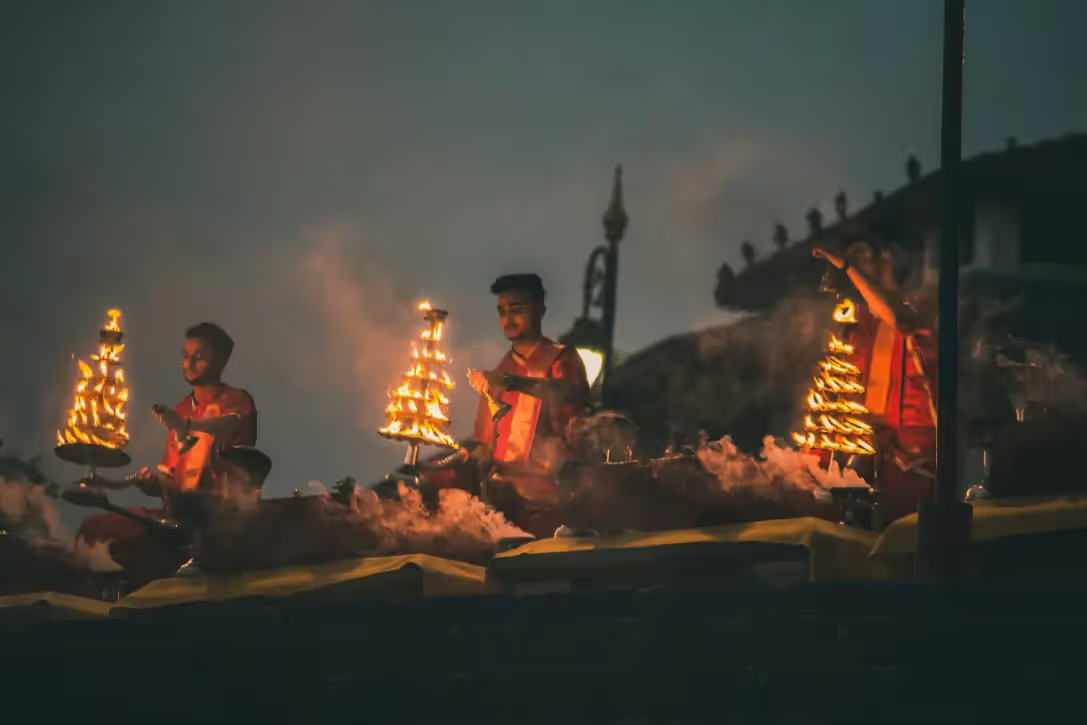
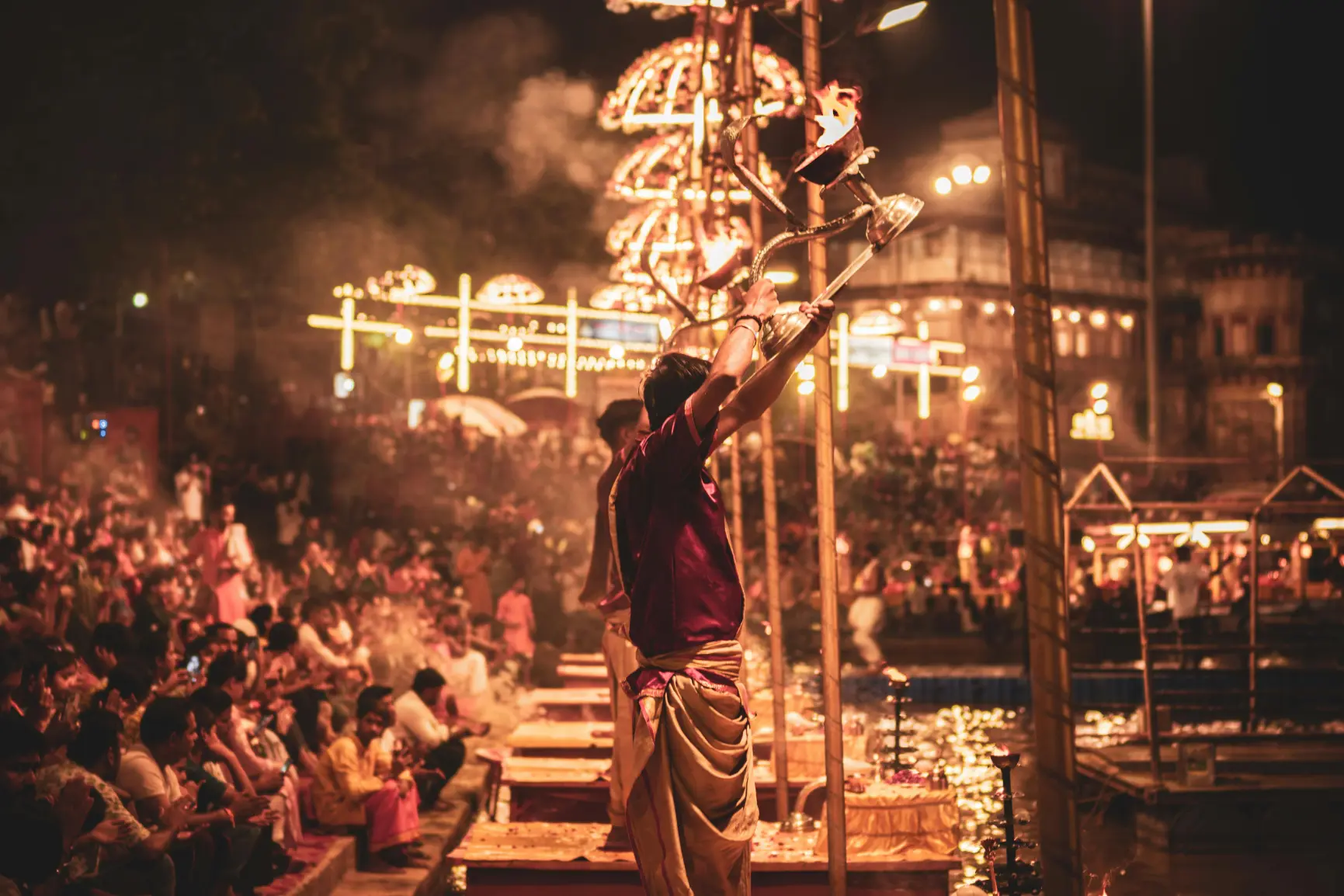
If mornings in Varanasi are quiet and contemplative, evenings are the exact opposite. As the sun dips, Dashashwamedh Ghat comes alive. The Crowd will gather from pilgrims to curious foreigners, waiting for the Ganga Aarti to begin. Priests dressed in saffron and cream line up, each holding a large brass lamp. The ceremony starts with a conch shell blast, so loud it vibrates in your chest.
Then, the choreography unfolds. Lamps swing in wide arcs, flames circle toward the river, bells ring in a steady rhythm, and chants roll like waves. From a boat anchored on the water, the sight is breathtaking: flames mirrored in the river, the sky painted in purples and golds, the entire scene glowing as if the world itself were part of the ritual.
Even if you don’t follow the mantras, you feel the energy. You sense the devotion of thousands moving in unison, and for that half-hour, the Ganges feels less like water and more like a living being. Many foreigners choose to watch from rooftop terraces or private boats to escape the crush of the crowd, but no matter where you stand, the ceremony grips you.
One of the charms of Varanasi is that it doesn’t compromise on authenticity, even as luxury travel has found its way in. Heritage hotels, once palaces and mansions of nobles, now open their balconies directly to the river. In the morning, you can sip coffee while listening to temple bells. At night, the view is of lanterns flickering on the ghats.
Varanasi features in some of India's most memorable cinema — our guide to India through Bollywood film locations gives context to how the city has been portrayed and why it draws travellers.
Luxury tours often blend the essentials, a spiritual India tour with sunrise and evening ceremonies, with softer touches: private guides who know the city’s mythology, silk-weaving workshops where families show you looms that have been in use for generations, or curated food walks that take you from a lassi stand to a hidden rooftop café.
This is what makes luxury Varanasi tours different from anywhere else in India: you aren’t just pampered; you are folded gently into the city’s rhythms, with comfort as a cushion rather than a barrier.
To stop at the ghats would be like seeing only the cover of a book. Varanasi is also its winding lanes, where walls are painted with bright murals of gods, and scooters squeeze past pilgrims carrying garlands. It is the silk shops where Banarasi saris shimmer in gold and crimson, and the street food stalls frying up spicy kachoris at seven in the morning.
Foreigners often find that these small, unscripted encounters are just as memorable as the grand ceremonies. A conversation with a chai-seller, a child offering marigolds at the ghat, the sudden appearance of a cow blocking your path, it’s all part of the tapestry.
Nothing comes close. No luxury suite or itinerary can fully prepare you for what Varanasi does to you. It’s not just about watching rituals or visiting temples, it’s about being confronted with the raw, unfiltered cycle of existence. You see joy and sorrow, devotion and chaos, beginnings and endings, all carried by the same river.
Many travelers arrive expecting to “see” Varanasi. Most leave realizing it’s a place you don’t just see, you feel it. Long after you’ve flown back home, the sound of bells at dusk, the sway of lamps in the evening Aarti, and the calm of the Varanasi Ganges boat ride at dawn will linger like a melody you can’t quite shake.
For a broader look at India's less-visited but equally compelling places, our guide to India beyond the Taj Mahal covers the destinations that discerning travellers are choosing over the obvious.
For foreigners searching for something more than another monument or museum, Varanasi is India at its most unapologetically spiritual. The Ganges boat rides, the evening Aarti, and the labyrinth of streets all reveal layers of a city that has been living its truth for millennia. And for those who want the balance of comfort, luxury Varanasi tours provide exactly that, without stripping away the soul of the place.
For a full overview of India — itineraries, hotel picks, and curated experiences — visit the LocalHi India destination guide.
Come with openness, leave with something you can’t define. That is the true gift of Varanasi.
1. What is the best way to experience the Ganges in Varanasi?
A sunrise boat ride on the Ganges River offers the most peaceful and immersive perspective of the city.
2. Where should I watch the Ganga Aarti from?
You can view it from the steps of Dashashwamedh Ghat, a boat on the river, or a nearby rooftop for a less crowded experience.
3. Is visiting Manikarnika Ghat appropriate for foreigners?
Yes, but it should be approached with respect and sensitivity, as it is an active cremation site central to Hindu beliefs.
4. How many days are ideal for Varanasi?
2–3 days is enough to cover sunrise and evening rituals, explore the old city, and take a short trip to nearby spiritual sites.
5. Are luxury experiences available in Varanasi?
Yes, including heritage hotels, private guides, and curated cultural tours that provide comfort without losing authenticity.
6. Is Varanasi overwhelming for first-time visitors?
It can be intense at first, but slowing down and observing the city’s rhythm makes the experience far more meaningful.
CURATED TOP DESTINATIONS


Subscribe for more updates!
Get exclusive travel inspiration, private itinerary ideas, and
curated destination guides from LocalHi's travel designers.