
Subscribe for more updates!
Get exclusive travel inspiration, private itinerary ideas, and
curated destination guides from LocalHi's travel designers.

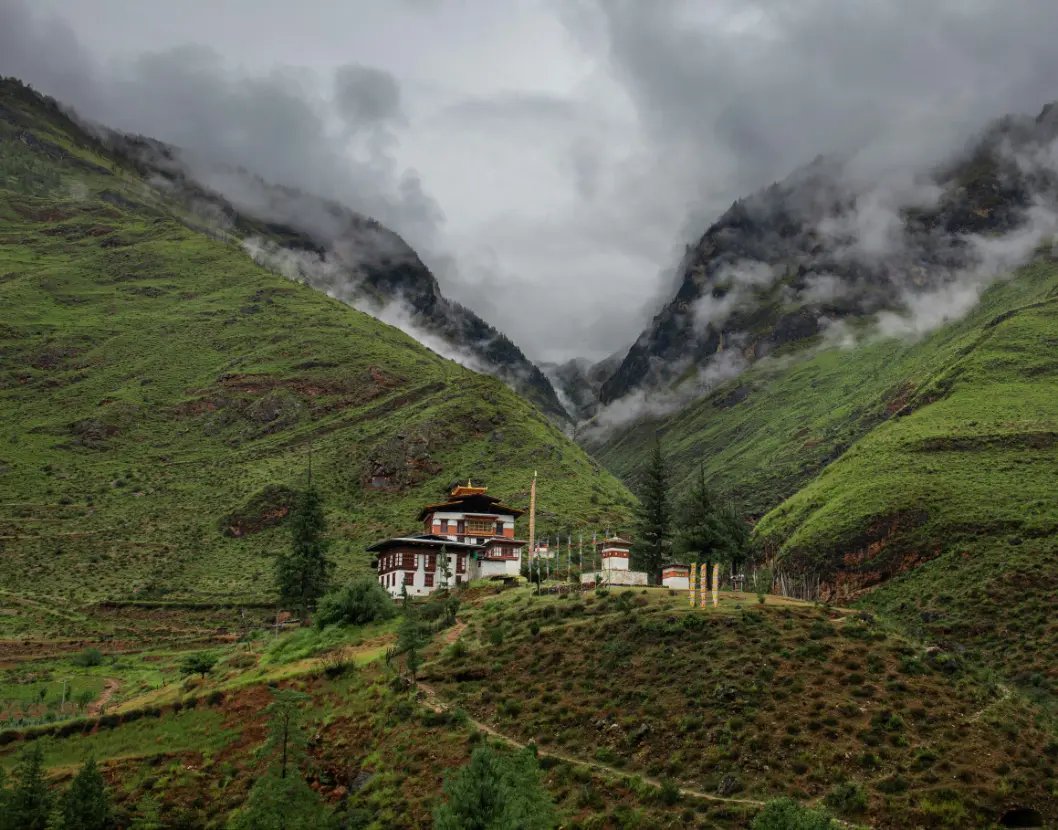
Most travel guides will give you a chart. March–May and September–November, highlighted in green. June–August in red. A sentence about festivals. Done.
That answer isn't wrong. It's just not particularly useful if you're planning a trip worth the journey.
The best time to visit Bhutan depends on what you actually want from it — and Bhutan rewards the traveller who asks that question honestly. The festivals that pull the country together, Tshechus that fill fortress courtyards with masked dances and entire valleys in motion, don't follow the standard peak season calendar. The lodges that matter most, Amankora and Six Senses, programme their best experiences around those windows, not around weather averages. And the so-called off-season, if you know which valleys to choose, can be the most intimate, most un-touristed version of Bhutan you'll find.
This guide covers every month, every season, and the specific festival windows worth building a journey around — not to fill a page, but because timing your trip correctly is the single biggest lever on how Bhutan feels when you're inside it.
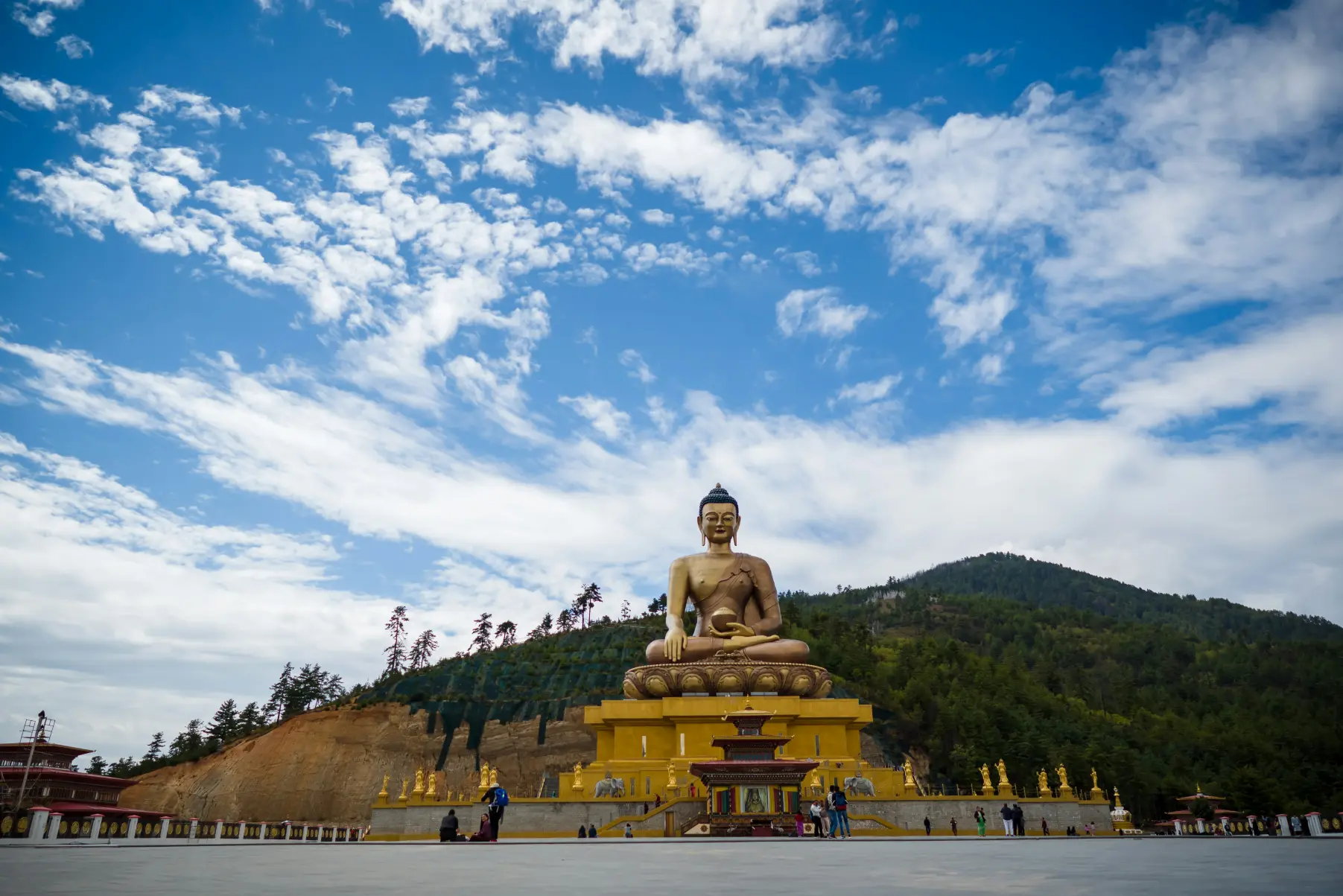
Bhutan's Tshechus are religious festivals held at dzongs and monasteries across the country — days-long events involving mask dances, ceremonial offerings, and a collective energy that is genuinely unlike anything else in the region. They are not tourist performances. They happen whether visitors are present or not, and the best ones pull Bhutanese families from every valley in the country.
For luxury travellers, the festivals matter for a specific reason: Amankora and Six Senses build their most sophisticated programming around these windows. Reserved viewpoints. Private cultural briefings with monks or historians. Access to spaces the general visitor crowd never reaches. If you're going to be in Bhutan anyway, timing around a Tshechu costs nothing extra and changes the depth of the experience considerably.
The single most important festival on the Bhutanese calendar. Held at the Rinpung Dzong above Paro Valley, it runs for five days and culminates in the unfurling of an enormous thangka — a silk appliqué — at dawn on the final morning before the sun rises and burns the fabric. The courtyard fills with monks, families, and ceremony that has been repeated in exactly the same way for centuries.
Amankora Paro and Six Senses Paro are both in the valley. Both offer festival-specific itineraries. Book six months ahead — availability tightens by December for March/April dates.
Held in Bhutan's capital and slightly less internationally known than Paro Tshechu, which is precisely why it suits luxury travellers better. The ceremonies are equally significant. The crowds are more local than tourist. Six Senses Thimphu and Amankora Thimphu both programme around it, and October's autumn light — crisp, clear, extending visibility across valleys for miles — makes the timing additionally compelling.
Less known globally. More intimate by nature. The ceremony at Punakha Dzong — one of the most beautiful fortress monasteries in Asia, built at the confluence of two rivers — is a re-enactment of a 17th-century battle, performed in armour and traditional dress. February in Punakha is warm, with daytime highs reaching 18–20°C, and the valley sits low enough to be genuinely pleasant while the rest of Bhutan is cold. Six Senses Punakha and Amankora Punakha both have space during this window. Book six weeks ahead rather than six months.

This is when Bhutan is at its most itself. The monsoon clears completely by mid-September. Skies open. Humidity disappears. Visibility extends to peaks that are obscured for most of the year. The air has a quality to it — cool, clean, sharp at the edges — that travellers consistently describe as the thing they weren't expecting.
September is underused relative to October and worth specific attention. Thimphu Tshechu often falls here. The mountains are clearing, the lodges have more flexibility, and rates are lower than the October peak. If the festival falls in your window and crowds concern you, September is the intelligent choice.
October is the headline month. Every valley is accessible. All high-altitude routes and passes are open. The full 13-day circuit through Paro, Thimphu, Punakha, Phobjikha and Bumthang runs exactly as designed. Amankora and Six Senses operate at full capacity with complete programming. It is, by every measure, peak Bhutan. The trade-off is exactly what you'd expect — premium rates, constrained availability, and tourist numbers that make certain spots feel less intimate than the destination deserves. None of this is catastrophic; the lodges absorb it well, and a well-designed itinerary keeps you on private routes.
November holds more than most travellers realise. The crowds thin sharply after the first week. The light stays excellent. High routes and passes remain open through most of the month before the first serious frost arrives at altitude. For travellers who missed October or want a quieter autumn experience, early November is a genuine alternative.
Book 4–6 months ahead for October. 6–8 weeks ahead for late September and November.
Best for: First-time visitors. Photographers. Full-country circuits. Anyone combining multiple valleys.
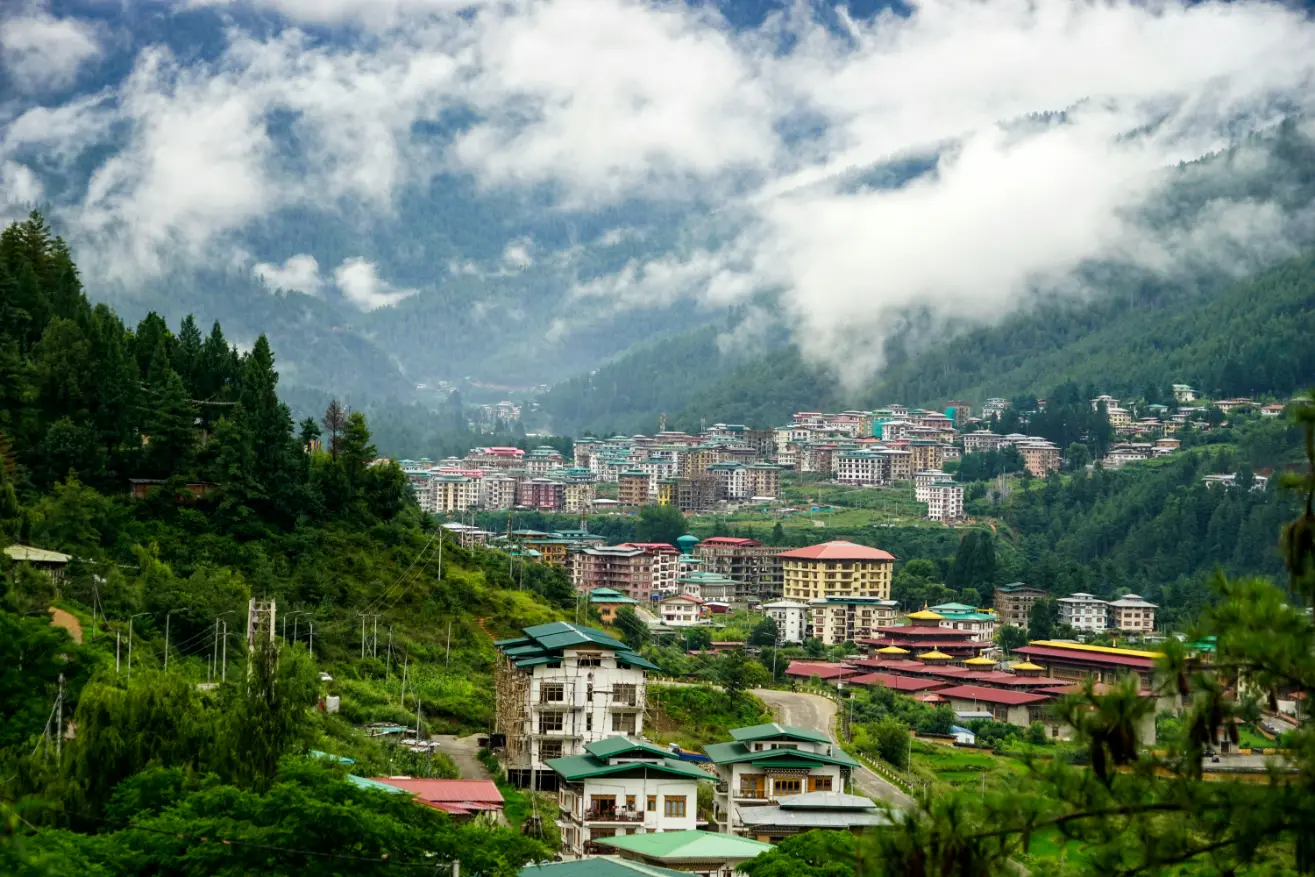
Spring is Bhutan's second season, and it earns its place for two reasons: Paro Tshechu and rhododendrons. The valley floors bloom from March, and by mid-April the slopes above Paro and Punakha are running with colour.
March opens the season cleanly. The rhododendrons are beginning, mornings are clear, and if Paro Tshechu falls in late March — the exact date shifts with the lunar calendar — the timing becomes exceptional. Lodges are not yet at peak capacity in early March, making it one of the quieter windows that still has full cultural programming.
April is the festival month. Paro Tshechu usually falls in late March or early April. Book six months ahead for this window — availability disappears faster than most travellers expect. The caveat is clouds. Lower valleys — Punakha, Phobjikha — stay relatively clear through spring. Paro and Thimphu accumulate afternoon cloud from mid-April. Mornings are often extraordinary; afternoons less so. If you need consistent visibility for photography or high-altitude trekking, this matters. If your trip centres on Paro and Punakha with cultural depth rather than mountain photography, it matters very little.
The late April to early May window is where experienced travellers find the sweet spot. Right after Paro Tshechu concludes, before the full monsoon pressure arrives. Festival energy is still in the air. Lodges are no longer at festival capacity. Rates ease by 15–20%. You get a version of peak-spring Bhutan without the booking constraints of being in the middle of the festival itself.
May is viable in its first half. Mornings are clear, afternoons cloud over, but the valleys are still beautiful. Late May is where the calculus changes — incoming monsoon cloud makes outdoor activities unpredictable. If spring is your season, stop at early May.
Book 4–6 months ahead for festival windows. 6–8 weeks for late April and early May.
Best for: Festival travellers. Couples wanting lower crowds with cultural depth. Anyone on a tighter schedule who can't commit to autumn timing.

Winter is positioned as off-season on most Bhutan travel guides, and almost everyone treats it that way
Punakha is the specific reason to reconsider. The valley sits at 1,200 metres — low by Bhutanese standards — which makes December and January genuinely mild. Daytime temperatures reach 16–18°C. Nights are cool, around 4–6°C, but not hostile. The Punakha Dzong sits in pale winter light that serious photographers seek out deliberately. Six Senses Punakha and Amankora Punakha operate fully, with spa programming that is more elaborate during this season precisely because the lodges have the bandwidth for it.
Phobjikha Valley in winter is a different kind of compelling. Between late October and February, hundreds of endangered black-necked cranes migrate from Tibet to winter on the valley floor. Gangtey Lodge — consistently one of the most highly-rated properties in the country — sits directly above the valley. A morning walk watching the cranes move across the wetlands against the backdrop of Gangtey Monastery is one of those Bhutan experiences that doesn't compress into a photograph. Six Senses Gangtey and Amankora Gangtey offer the same valley access.
January is the quietest month in Bhutan and the most private. Lodges run at 50–70% capacity. Guides give their full attention. Itinerary flexibility is real rather than nominal. Rates sit 20–35% lower than autumn — not because anything is compromised, but because demand is genuinely lower.
February adds the Punakha Drubchen festival to the equation, warming temperatures in the lower valleys, and the final weeks of crane season. Of the three winter months, February offers the best convergence of intimacy, mild weather, and cultural programming.
The drawback is altitude. Paro and Thimphu are cold at night — hovering around zero Celsius in December and January. High-altitude treks and mountain passes close. A valley-based itinerary covering Punakha, Phobjikha, and lower Paro is nearly perfect in winter. A full-country circuit is not.
Book 2–4 weeks ahead. The flexibility is part of the appeal.
Best for: Couples seeking privacy and intimacy. Birdwatchers. Wellness-focused travellers. Anyone who wants Bhutan without the tourist layer.
Skip it, unless you have a specific reason not to.
Landslide risks compromise road access across mountain passes. Visibility drops. Most high-altitude activities shut down. The aesthetic of Bhutan — wide valley views, mountain clarity, fortress monasteries rising against open sky — is largely obscured. The country is lush and green and genuinely beautiful in a different way, but most of what makes a luxury Bhutanese itinerary work isn't viable during peak monsoon.
Bumthang, sitting at higher altitude and catching less of the southwest monsoon, stays relatively functional. Birders and botanists have legitimate reasons to visit in this window. For everyone else: rebook for autumn or spring.
You want the festival, full stop. Book Paro Tshechu (March/April) or Thimphu Tshechu (September/October). Six months ahead for Paro. Three to four months for Thimphu. The experience justifies the forward planning.
You want Bhutan at its most beautiful. October. Clear light, all valleys open, the tail of festival season still present. Four to six months ahead.
You want fewer people. December or January in Punakha and Phobjikha. The cranes will be in the valley. The lodges will have space. Book a month ahead.
You want value without compromising quality. Late April or early May, just after Paro Tshechu. Rates ease, crowds thin, and the spring light in the lower valleys is excellent.
You're planning a first visit. Five days covering Paro and Punakha works across spring and autumn both. Nine days through the western valleys is the more complete introduction. Both seasons reward it equally — your timing preferences should drive the decision, not the itinerary.
What is the absolute best month to visit Bhutan?
October. Skies are clearest, all valleys and passes are open, and the country is fully accessible. If you're visiting once and want the full version, October is the answer. Book four to six months ahead.
Is Bhutan in winter worth considering?
Yes — specifically in Punakha and Phobjikha. Punakha is warm enough to be genuinely comfortable in December and January, with daytime temperatures reaching 16–18°C. Phobjikha has the black-necked cranes migrating from Tibet through February. The lodges are less full, guides are more attentive, and the intimacy of the destination comes through more clearly. The mistake is treating all of Bhutan as winter-viable — Paro and Thimphu are cold, and high-altitude routes close.
What is the weather like in Bhutan in October?
October brings the clearest skies of the year across all valleys. Daytime temperatures in Paro and Thimphu sit between 15–20°C. Nights are cool, around 5–8°C. Visibility extends to Himalayan peaks that are obscured for much of the year. There is no rainfall to speak of after mid-September. It is, by most measures, the finest weather Bhutan offers.
What is the weather like in Bhutan in March and April?
March is generally clear with warming temperatures. April introduces afternoon cloud in Paro and Thimphu, though mornings remain crisp and photogenic. Lower valleys — Punakha, Phobjikha — stay clearer through spring. Paro Tshechu usually falls in late March or early April, making cloud cover an acceptable trade-off for the festival experience.
Do I need to plan around a festival?
Not necessarily. The festivals transform the experience, but Bhutan is extraordinary without them. If a Tshechu falls naturally within your travel window, build around it. If it doesn't, a well-designed itinerary around the valleys themselves is entirely sufficient.
How far ahead do I need to book Bhutan?
For October and Paro Tshechu windows: four to six months minimum. Amankora and Six Senses are small properties with limited rooms, and availability disappears faster than most travellers expect. For winter and shoulder seasons: four to six weeks is typically enough.
Can I visit Bhutan in May or June?
May works, particularly early May after Paro Tshechu. Mornings are clear, afternoons cloud over, but the valleys remain beautiful. June is the transition into monsoon and is generally not recommended — the risk-to-reward calculation turns unfavourable from mid-June onward.
Which are the best lodges for a winter visit to Bhutan?
Gangtey Lodge, Six Senses Gangtey, and Amankora Gangtey for the crane season in Phobjikha. Six Senses Punakha, Amankora Punakha, and Dhensa for the warmth and river access of Punakha Valley.

The right time to visit Bhutan isn't the same answer for every traveller. It's the window that aligns with what you actually want — the festival, the solitude, the light, or the cranes.
Browse our 5-day, 9-day, and 13-day Bhutan itineraries to see how different seasons shape each journey. Or visit the Bhutan destination page for the full picture of what the kingdom holds.
When you're ready to build your trip around the timing that matters to you, we're here to design it. Get in touch.
CURATED TOP DESTINATIONS


Subscribe for more updates!
Get exclusive travel inspiration, private itinerary ideas, and
curated destination guides from LocalHi's travel designers.