
Subscribe for more updates!
Get exclusive travel inspiration, private itinerary ideas, and
curated destination guides from LocalHi's travel designers.

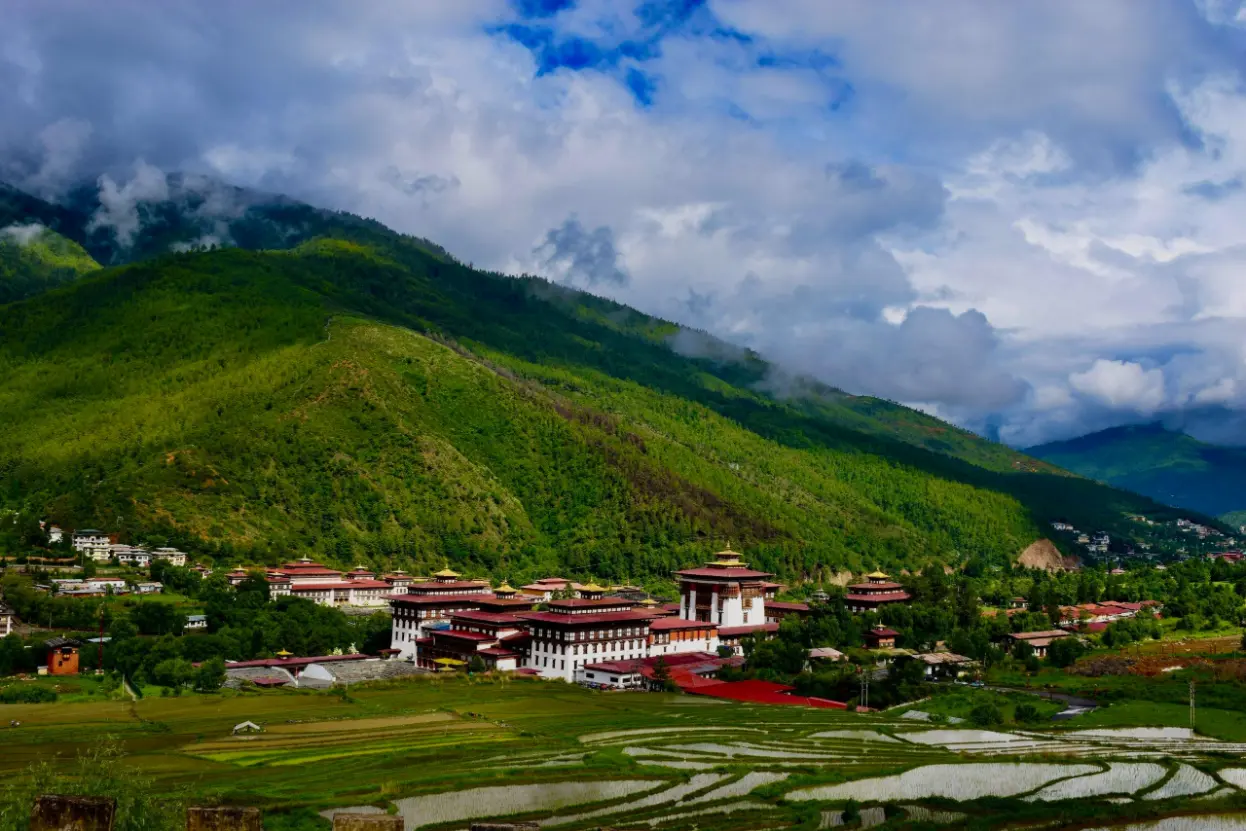
Five days in Bhutan is not a compromise. It is a choice — a deliberate one that trades breadth for depth and arrives, if planned correctly, feeling complete rather than abbreviated.
The standard version of this trip looks like this: land in Paro, check a box at Tiger's Nest, drive to Punakha for the dzong photograph, return to Paro, depart. It moves quickly. It covers the icons. It leaves most people feeling like they saw Bhutan's highlights without actually feeling Bhutan.
The version worth doing is slower than that. It gives Tiger's Nest a proper morning rather than a rushed ascent. It lets Punakha Valley reveal itself over an evening and a full day rather than a single afternoon. It crosses the Dochu La pass at the right hour instead of in transit. The difference between the two is not more days — it is better decisions about what the days contain.
This is the five-day itinerary that holds up.
Five days works best focused on two valleys — Paro and Punakha. Any more than that and you're spending the trip in a car.
Tiger's Nest should be a morning, not an afternoon. Start by 7am and you'll have the trail largely to yourself.
The drive between Paro and Punakha via Dochu La pass is not a transfer — it is one of the finest hours in Bhutanese travel on a clear morning.
Punakha Valley is warmer than Paro year-round. In winter it's a genuine pleasure; in spring it floods with colour.
Luxury properties in both valleys — Amankora and Six Senses — run their best programming for stays of two nights minimum. One night in each valley is the floor.
For a broader country introduction — adding Phobjikha Valley and Thimphu — see the 9-day itinerary.
Two valleys. Five days. Four significant experiences and the moments between them that most itineraries undervalue.
Paro Valley: The Rinpung Dzong. Kyichu Lhakhang — one of Bhutan's oldest temples, built in the 7th century. Tiger's Nest Monastery (Taktsang Lhakhang), at 3,120 metres above the valley floor. The valley itself, which most visitors treat as a runway and should treat as a destination.
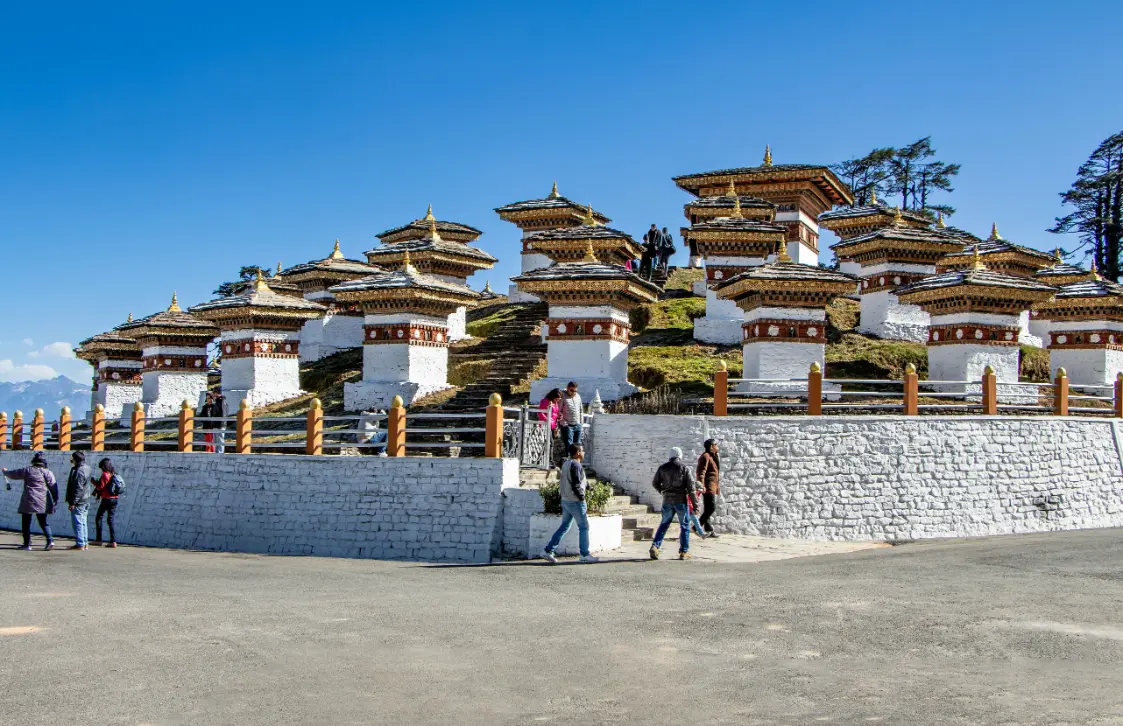
Dochu La Pass: At 3,050 metres, the pass between Thimphu and Punakha is marked by 108 memorial chortens built by Bhutan's Royal Queens. On a clear morning, the high Himalayan range is visible to the north. It is a transfer that becomes a stop.
Punakha Valley: Punakha Dzong — the most beautiful fortress monastery in Bhutan, built at the confluence of the Mo Chhu and Pho Chhu rivers in 1637. Chimi Lhakhang, the fertility temple of Lama Drukpa Kunley, reached on foot across rice paddies. The valley walk at dusk.
This is the right scope for five days. Anything added — Thimphu's sights, a further valley — compresses what's here into transit and rush.
Landing at Paro International Airport is itself an event. The approach descends through steep Himalayan valleys with wingtips close enough to ridgelines that most passengers go quiet. It is one of the most technically demanding landings in commercial aviation and one of the most spectacular arrivals on earth.
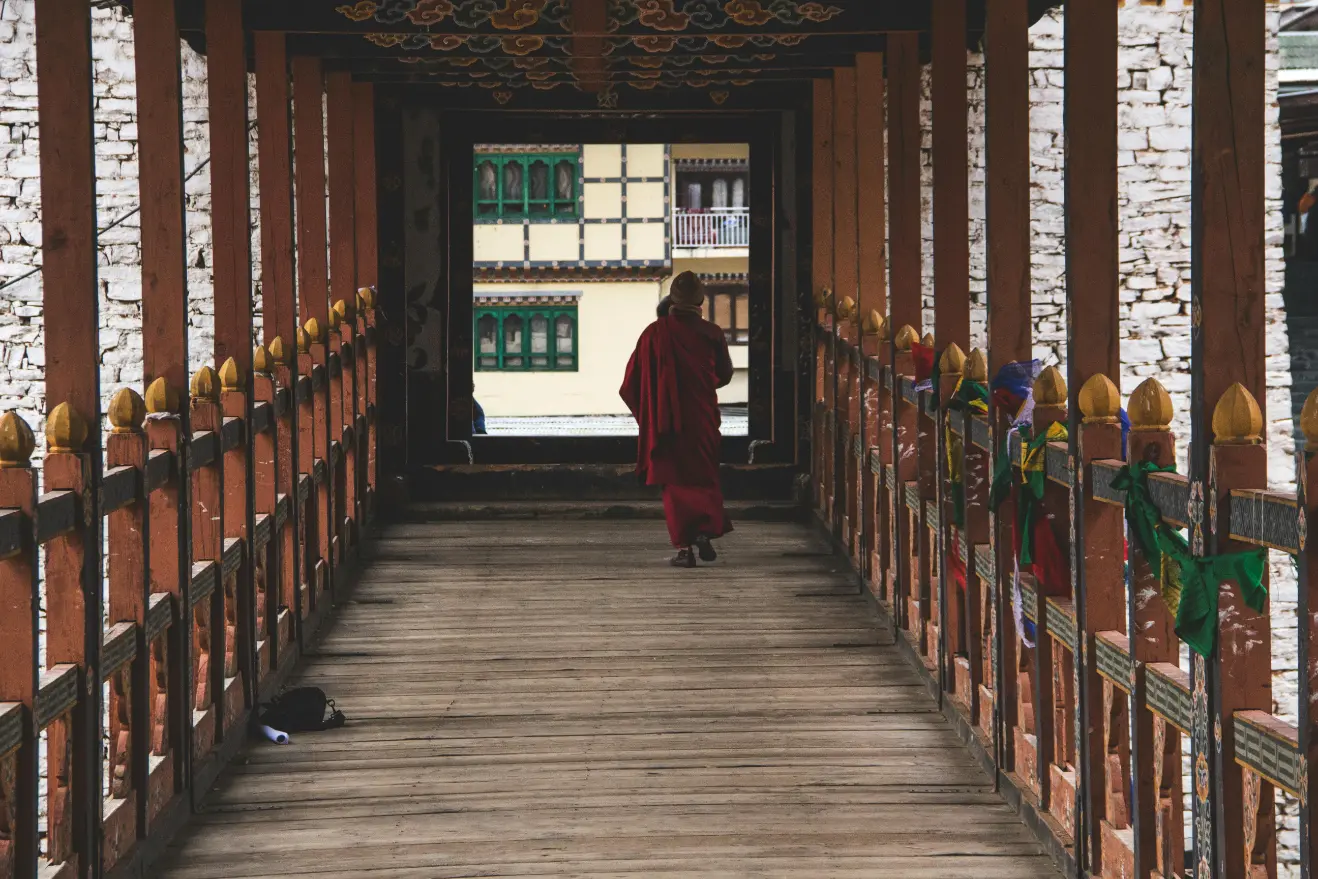
The afternoon belongs to Rinpung Dzong — the fortress monastery that sits above the Paro River on a ridge above town. It is the first full encounter with Bhutanese architecture: whitewashed walls, sloping wooden galleries, a courtyard used for the Paro Tshechu festival each spring. Walk the covered bridge below it. Follow the river path back toward town. Let the valley begin to register at its own pace.
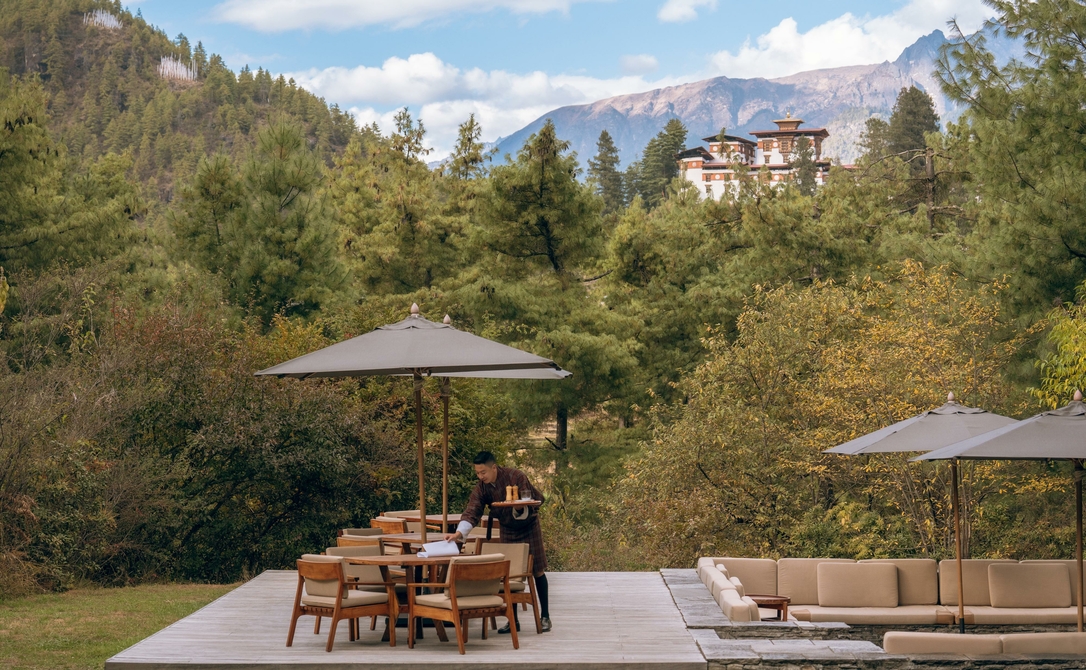
Evening at your lodge. Amankora Paro sits in a blue pine forest above the valley — twenty-four rooms, a spa drawing on traditional Bhutanese healing practices, and a stillness that the valley delivers without effort. Six Senses Paro is built within and around historic stone ruins above the valley, with views that extend the full length of the Paro floor. Both position you for an early Tiger's Nest start without a long transfer in the morning.
GPS Coordinates: Rinpung Dzong: 27.4296° N, 89.4168° E
Time Allocation: Dzong visit 2 hours, valley walk 1 hour
Pro Tip: Ask your guide to time the dzong visit for late afternoon light — the whitewashed walls glow golden between 4-5pm in autumn and spring.
Leave your lodge by 7am. The trail to Tiger's Nest starts before the tour buses arrive and finishes before the midday heat builds. This is not a suggestion — it is the material difference between having the monastery largely to yourself and sharing every viewpoint.
The trail climbs 900 metres through pine forest above the valley floor. It takes two to four hours return depending on pace. The path passes a waterfall viewpoint roughly halfway up where the monastery becomes visible for the first time, clinging to the cliff face at a position that still seems improbable regardless of how many photographs you have seen. The monastery itself — Taktsang Lhakhang, first built in 1692 on the site where Guru Rinpoche is said to have meditated in the 8th century — is reached by descending to a bridge and climbing back up to the cliff face. Inside: butter lamps, low ceilings, monks moving quietly between rooms. It earns every step of the approach.
Return before noon. Rest. Eat well.
Afternoon: Kyichu Lhakhang. One of Bhutan's two oldest temples, built in the 7th century by the Tibetan king Songtsen Gampo. The temple is small, active, and genuinely ancient in a way that feels different from Bhutan's larger dzongs. The garden of prayer flags and the lhakhang's orange trees make it one of the most peaceful hours in Paro.
GPS Coordinates: Tiger's Nest: 27.4929° N, 89.3639° E | Kyichu Lhakhang: 27.4433° N, 89.4075° E
Time Allocation: Tiger's Nest 4-5 hours total, Kyichu Lhakhang 1 hour
Pro Tip: Horses are available to the midway cafeteria point (around 2,600m altitude) for those who want to conserve energy for the final ascent. Book through your guide the evening before.
Ready to experience Tiger's Nest at sunrise with zero rushed moments? See the full journey details →
The drive from Paro to Punakha takes three to four hours via Thimphu, crossing the Dochu La pass at 3,050 metres. Most itineraries treat this as logistics. It isn't.
The pass, if you arrive in the morning before cloud builds, offers one of the finest views in western Bhutan. The 108 memorial chortens — built by the Royal Queens after a 2003 military campaign — stand in the mist or the early light depending on what the morning gives you. The Himalayan range is visible to the north on clear days: a long white edge of peaks that most travellers do not expect from a mountain pass that is, by Bhutanese standards, relatively accessible.
Descend from the pass into the Punakha Valley. The temperature change is immediate — Punakha sits at 1,200 metres, nearly 1,000 metres lower than Paro, and the air is warmer and heavier. The valley opens into rice paddies, banana trees and a green density that Paro, at its higher altitude, doesn't carry.
Check in. Walk the valley before dinner. The Punakha river paths at dusk, with the dzong visible in the distance and the valley quietly settling into evening, is one of those unremarkable hours that every traveller to Bhutan eventually describes as a highlight.
Accommodation: Six Senses Punakha is positioned in the valley with direct river and dzong views. Amankora Punakha sits above the Mo Chhu river with the intimacy that is consistent across its lodge network. Dhensa Boutique Resort is a well-regarded independent option for travellers who want something smaller in scale.
GPS Coordinates: Dochu La Pass: 27.4936° N, 89.7781° E
Time Allocation: Dochu La stop 45 minutes, total drive 3.5-4 hours
Pro Tip: Request your guide to time the Dochu La stop for 9-10am. Cloud cover typically builds after 11am, obscuring the Himalayan views.
Punakha Dzong is the reason Punakha is on the itinerary. Built in 1637 at the meeting of the Mo Chhu and Pho Chhu rivers — the mother and father rivers, as Bhutanese tradition names them — it is the most beautiful fortress monastery in Bhutan and one of the finest examples of traditional Bhutanese architecture in existence. The approach is across an old wooden cantilever bridge. The whitewashed walls rise from the river confluence directly in front of you. Inside: a series of courtyards, temples hung with thangkas, monks going about their day without interruption.
Come in the morning, when the light is on the white walls and the river is visible from the upper courtyards.
Afternoon: Chimi Lhakhang. The temple of Lama Drukpa Kunley — the Divine Madman, a 15th-century Buddhist master known for subverting convention and for a ribald approach to enlightenment that made him both revered and singular. The temple is reached by a thirty-minute walk across rice paddies from the road, past farmhouses and small shrines. It is a completely different hour from Punakha Dzong — smaller, more human-scale, and with a lightness of atmosphere that reflects its subject's character well.
Return along the river for the last Punakha evening.
GPS Coordinates: Punakha Dzong: 27.5949° N, 89.8638° E | Chimi Lhakhang: 27.5820° N, 89.8434° E
Time Allocation: Punakha Dzong 2 hours, Chimi Lhakhang walk + visit 2 hours
Pro Tip: The walk to Chimi Lhakhang crosses active rice paddies — wear comfortable walking shoes and expect uneven terrain. The path is beautiful but muddy after rain.
The return to Paro via Thimphu takes three to four hours with stops. Thimphu — Bhutan's capital and the only capital city in the world without traffic lights — functions well as a transit rather than a destination on a five-day trip, but there are specific stops worth making rather than driving through.
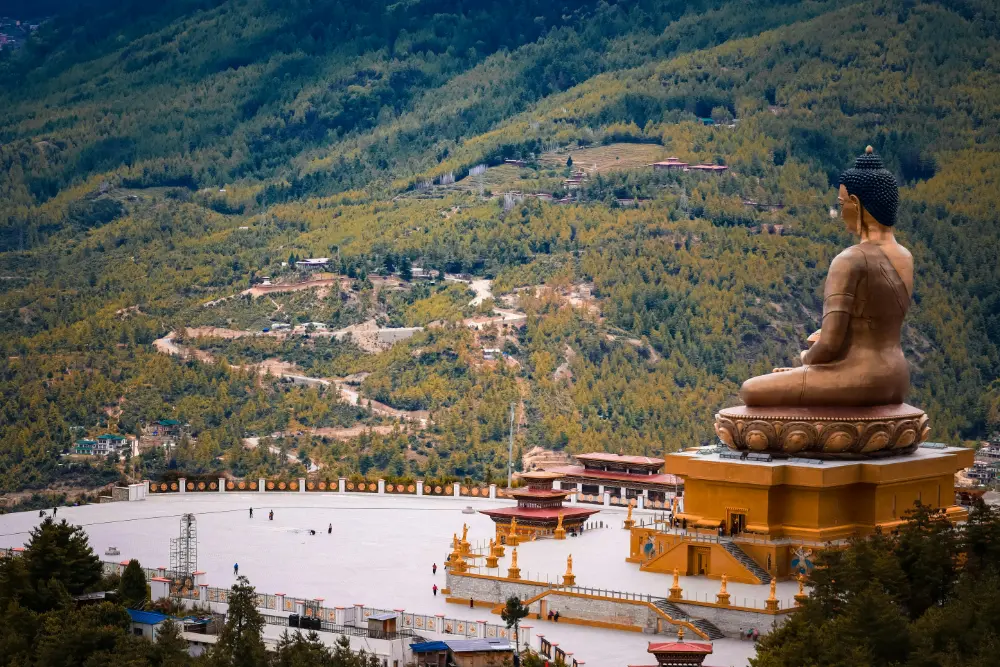
The weekend market (Saturdays and Sundays) is the most local and alive thing happening in Thimphu — a covered market selling everything from religious objects to dried yak cheese. Worth an hour if the timing falls right. The Folk Heritage Museum and the National Textile Academy are both compact and genuinely informative if you have a specific interest. The 51.5-metre gilded Buddha Dordenma, sitting above the valley on the Kuenselphodrang hillside, is a landmark worth a stop for the view across the city rather than the statue itself.
Evening departure from Paro International Airport.
GPS Coordinates: Buddha Dordenma: 27.4797° N, 89.6419°
Time Allocation: Thimphu stops 1-2 hours maximum, total return drive 3-4 hours
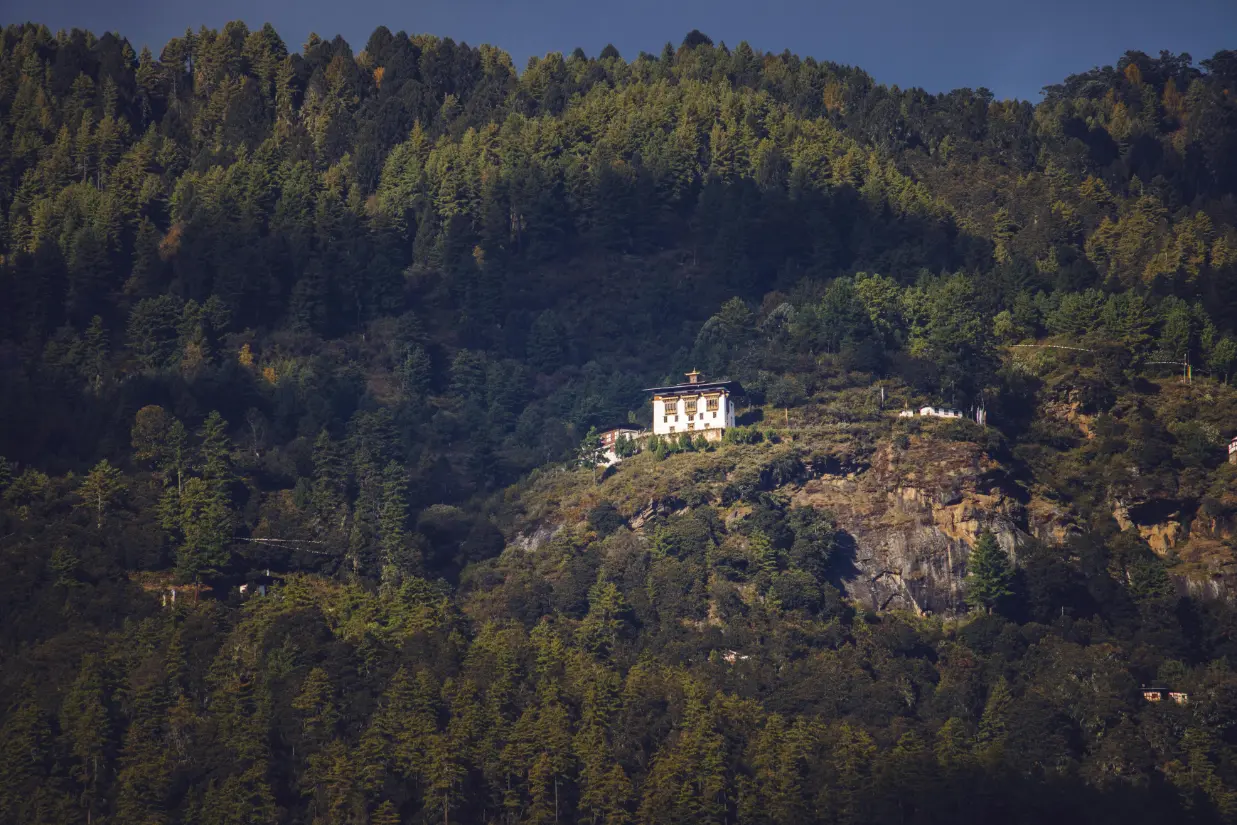
The honest version: Amankora and Six Senses are the two luxury networks that define the top end of Bhutanese hospitality, and both have lodges in both valleys on this itinerary. They are genuinely different from each other in design philosophy and pace, and choosing between them matters.
Spare, considered, and quiet in a way that prioritises architecture and landscape above programming. The properties are small — twelve to twenty-four rooms — and designed around the valley they occupy. The Paro lodge sits in a blue pine forest; Punakha sits above the river. If your definition of luxury is the absence of noise and the presence of space, Amankora is the answer.
Brings more programming, a heavier wellness emphasis, and a design vocabulary that is more visually expressive. The Paro property is built into historic stone ruins; the Punakha lodge has direct views to the dzong. If you want spa and wellness as a genuine part of the journey rather than an optional extra, Six Senses designs around it.
Both are world-class. The choice is about temperament, not quality.
For travellers not at the Amankora/Six Senses price point: Dhensa Boutique Resort in Punakha and OZEN Resort in Paro are the strongest mid-range options on this route. Both deliver excellent service, strong locations, and rates typically 40-50% below the luxury tier.
Unsure which lodge suits your travel style? Contact us and we'll match you to the right property based on your preferences.
This five-day itinerary works in both main seasons — spring (March–May) and autumn (September–November) — but each delivers a different trip.
Paro Tshechu falls in March or April, and if your dates align, the festival transforms the Paro Valley portion of the trip completely. Rhododendrons are in bloom on the hillsides above 2,000 metres. Punakha is warm and green. The caveat is cloud — afternoons in Paro can be overcast from late April, which softens the light but doesn't compromise the experience.
Temperature: Paro 10-20°C, Punakha 18-28°C
Rainfall: Low in March, increasing April-May
October is the cleanest, clearest month in Bhutan. The Dochu La pass view on Day 3 is most likely fully open in October. The Tiger's Nest trail is dry and the visibility from the upper viewpoints extends across the full Paro Valley. Festival energy from September's Thimphu Tshechu lingers into early October.
Temperature: Paro 8-18°C, Punakha 15-25°C
Rainfall: Minimal
This itinerary works well in December and January specifically because both Paro and Punakha are at altitudes where winter is manageable. Punakha is warm. Paro is cold in the evenings but functional during the day. The advantage: both lodges have space, and the experience is more intimate than either main season.
Temperature: Paro 0-12°C, Punakha 8-20°C
Advantage: Lower SDF rates during low season (check current government policy)
Heavy rain, leeches on trails, obscured mountain views. Not recommended unless you have very specific reasons.
For a complete seasonal breakdown, read our guide to the best time to visit Bhutan.
Note: The Sustainable Development Fee funds Bhutan's free healthcare, education, and environmental conservation. It's non-negotiable for international tourists (Indian, Bangladeshi, and Maldivian nationals pay a separate, lower levy).
Costs are current as of May 2026. Prices may vary based on season and specific lodge rates.
Paro is the only international airport in Bhutan. Direct connections from Delhi, Mumbai, Kolkata, Kathmandu and Bangkok with Drukair or Bhutan Airlines. From Europe and the US, the routing is typically via Delhi or Bangkok.
Current flight times (May 2026):
International tourists pay a Sustainable Development Fee of USD 100 per person per night, set by the Bhutanese government. It funds healthcare, education and conservation and is non-negotiable. Indian, Bangladeshi and Maldivian nationals are subject to a separate, lower levy.
The SDF is separate from accommodation, guide fees, and transport costs.
All international tourists must travel with a licensed guide. LocalHi manages all guide and logistics arrangements as part of the journey — nothing needs to be arranged separately. Your guide handles:
International tourists require a Bhutan visa, arranged through a licensed Bhutanese tour operator — LocalHi manages this as part of the journey. Indian, Bangladeshi and Maldivian nationals enter on a permit rather than a visa, available on arrival with valid ID.
Paro connects easily to Delhi, Kolkata and Kathmandu, making Bhutan a natural addition to an India or Nepal trip. We regularly design combined journeys across Rajasthan, Sikkim and Darjeeling. Contact us to discuss multi-country itineraries.
Is 5 days really enough for Bhutan?
Yes, 5 days is enough to see Bhutan's highlights without rushing. You'll visit Paro Valley, Tiger's Nest Monastery, Punakha Dzong, and cross the scenic Dochu La pass. This itinerary focuses on two valleys rather than rushing through many regions. For broader exploration including Phobjikha Valley and Bumthang, consider 9-13 days instead.
What is the best 5-day Bhutan itinerary?
The best 5-day Bhutan itinerary includes Paro (Days 1-2) for Tiger's Nest Monastery and Rinpung Dzong, Dochu La pass crossing (Day 3), Punakha Valley (Days 3-4) for Punakha Dzong and Chimi Lhakhang, and return via Thimphu (Day 5). This covers Bhutan's top attractions without excessive driving.
How difficult is the Tiger's Nest hike?
The trail is 2-4 hours return with 900 metres total ascent. It's not technically demanding — no scrambling required, the path is well-maintained — but altitude (the monastery sits at 3,120m) makes effort feel greater than the gradient suggests. Horses are available to midway point. Starting by 7am means ascending in cool morning air rather than midday heat.
How much does a 5-day Bhutan trip cost?
Expect $4,400-6,300 per person for luxury lodges (Amankora/Six Senses), or $3,000-4,350 for mid-range properties. This includes the mandatory $500 Sustainable Development Fee (5 nights × $100/night), flights, accommodation, guide, and transport. The SDF funds Bhutan's free healthcare, education, and conservation programs.
What does the USD 100 SDF actually cover?
The Sustainable Development Fee funds healthcare (free for all Bhutanese citizens), education (free through university level), environmental conservation, and cultural preservation. The fee is separate from hotel costs, guide fees and transport. When staying at luxury properties, the SDF represents roughly 10-15% of daily costs.
Do I need a visa for Bhutan?
International tourists require a Bhutan visa, arranged through a licensed tour operator — LocalHi manages this as part of the journey. Indian, Bangladeshi and Maldivian nationals enter on a permit (not visa), available on arrival with valid passport or voter ID.
Can I extend this 5-day trip if I want more time?
Yes. The natural extension is adding Phobjikha Valley and its black-necked cranes (in season), which brings you to 9 days. Adding Bumthang — Bhutan's spiritual heartland — takes the journey to 13 days and completes the full western and central circuit. Both extensions are designed and ready.
What's the best luxury lodge for a first Bhutan visit?
Both Amankora Paro and Six Senses Paro are excellent. The decision comes down to what you want the trip to feel like: Amankora is quieter and more architectural; Six Senses is more programmed and wellness-forward. Both deliver world-class experiences — the choice is about temperament, not quality.
Is Bhutan safe for solo travelers and families?
Extremely safe. Bhutan has very low crime rates, and the mandatory guide system means you're never navigating unfamiliar situations alone. The country is excellent for families — many lodges accommodate children well, and the cultural experiences (dzongs, festivals, monasteries) engage all ages.
What is the best month to visit Bhutan for 5 days?
October offers the best weather — clear skies, dry trails, and full Himalayan views from Dochu La pass. March-April is second choice for festivals (Paro Tshechu) and spring blooms, though afternoon clouds are more common. Avoid June-August (monsoon season).
Five days in Bhutan, done properly, is a complete experience. It is not a taster. It is not the lesser version of a longer trip. It is two valleys at their most significant, given enough time to actually register.
Ready to experience Bhutan properly? Tell us your dates and we'll craft your perfect 5-day journey — Tiger's Nest at sunrise, handpicked luxury lodges, and zero rushed moments.
Browse the full Essential Bhutan 5-Day Journey for detailed pricing and inclusions. Or, if you're weighing a longer trip, read the 9-day itinerary to see what the additional days unlock.
Explore more about Bhutan as a destination or view our complete Bhutan hotel collection.
CURATED TOP DESTINATIONS


Subscribe for more updates!
Get exclusive travel inspiration, private itinerary ideas, and
curated destination guides from LocalHi's travel designers.