
Subscribe for more updates!
Get exclusive travel inspiration, private itinerary ideas, and
curated destination guides from LocalHi's travel designers.


Nine days is the sweet spot for a first-time Bhutan trip. It covers all four western valleys—Paro, Thimphu, Punakha, and Phobjikha—without the rushed pacing of a 5-day itinerary or the specialized interests required for 13 days. You get Tiger's Nest Monastery, Punakha Dzong at dawn, the capital's weekend markets, and Phobjikha Valley's black-necked cranes, with enough downtime in each place to actually absorb it.
This 9-day Bhutan itinerary is designed for travelers who want the complete western circuit: the essential monasteries, the finest dzong, the valley that separates good trips from unforgettable ones, and the breathing room to experience Bhutan at a human pace rather than a checklist sprint.

Four valleys. Nine days. No filler.
This route moves west to east through Bhutan's most significant cultural and natural landscapes before looping back to Paro for departure. It's the circuit both Amankora and Six Senses designed their lodge networks around.
The difference between trip lengths isn't just more valleys—it's how much of Bhutan you actually understand versus how much you photograph.
The verdict: Nine days is the itinerary that brings travelers back to Bhutan. Not because it's incomplete, but because four valleys open a country that a first visit only introduces. Most people who do 5 days wish they'd done 9. Most who do 9 wish they'd done 13. Almost no one who does 9 regrets the length.
For a detailed breakdown of the shorter option, read our 5-day Bhutan itinerary guide.
Day 1: Arrival in Paro
Morning/Afternoon: Land at Paro International Airport. The descent through steep Himalayan valleys is part of the experience—most passengers go quiet before clearing immigration. The approach alone sets the register for the trip.
Afternoon Activity: Rinpung Dzong, the fortress monastery above the Paro River. Walk the traditional covered bridge (Nyamai Zam) below it and follow the river path back into town. The dzong is active—monks, administrative offices, and courtyards still in use.
Evening: Check into your lodge. Amankora Paro sits in a blue pine forest above the valley. Six Senses Paro is built into historic stone ruins with valley views in both directions. OZEN Resort offers a strong mid-range option with excellent Paro views. All three position you for an early Tiger's Nest start without a long morning transfer.
Overnight: Paro
Day 2: Tiger's Nest Monastery (Taktsang Lhakhang)
6:30am: Leave for Tiger's Nest trailhead. Early starts avoid afternoon crowds and catch the monastery in morning light.
7:00am - 11:00am: The hike. 900 meters of ascent through pine forest above the valley floor—2 to 4 hours return depending on pace. The monastery sits at 3,120 meters on a cliff face above a sheer drop. First built in 1692 on the site where Guru Rinpoche meditated in the 8th century. Inside: butter lamps, low ceilings, resident monks, and a stillness that has nothing to do with tourism.
Afternoon: Kyichu Lhakhang—one of Bhutan's two oldest temples (7th century), still active, quiet in the way very old sacred places often are. Then: Paro town exploration or rest at the lodge. Paro in evening light from the dzong ridge is a different version of the valley from what you saw on arrival.
What to Know: Tiger's Nest is the most physically demanding element of this entire 9-day itinerary. If you have mobility concerns, horses can take you partway (to the cafeteria viewpoint). The monastery itself requires climbing stairs—no alternative for that section.
Overnight: Paro
Day 3: Paro to Thimphu — Bhutan's Capital
Morning: Drive to Thimphu (1 hour). This is not a demanding day—Thimphu is compact and best explored on foot.
Late Morning: Buddha Dordenma. The 51.5-meter gilded bronze Buddha sits above the Kuenselphodrang hillside overlooking the entire valley. The view from this elevation on a clear morning justifies the climb before the statue itself.
Afternoon: Tashichho Dzong (Bhutan's administrative and religious center), the National Textile Museum (Bhutan's hand-woven kishuthara and yathra textiles are among the country's most sophisticated craft practices), and the Folk Heritage Museum. All three are within walking distance in the lower town.
If It's Saturday or Sunday: The weekend market is the most alive thing happening in Thimphu. A covered market selling religious objects, dried foods, traditional medicine, everyday goods to local buyers rather than tourists. More useful than any museum for understanding what Bhutanese people actually value.
Evening: Check into Amankora Thimphu (forested edge of the city, quiet by capital standards) or Six Senses Thimphu (hillside above the city with the most elaborate spa programme of any lodge on this circuit).
Overnight: Thimphu
Day 4: Thimphu to Punakha via Dochu La Pass
Early Morning: Leave Thimphu by 7:30am. The drive to Punakha via Dochu La Pass is one of the finest hours in western Bhutan and consistently undervalued by itineraries that treat it as just a transfer.
Dochu La Pass (3,050m): 108 memorial chortens (white stone stupas) built by Bhutan's Royal Queens after a 2003 military campaign, standing in rows across the ridgeline. On clear mornings, the high Himalayan range is fully visible to the north—Masang Gang, Tsendagang, Terigang. Cloud builds by mid-morning most days, so the early departure earns the view.
Descent into Punakha: The temperature change is immediate and physical. The valley sits nearly 1,000 meters lower than Paro or Thimphu. Air gets heavier, warmer, greener. Banana trees appear roadside. Rice paddies are a different color than anything you've seen in the higher valleys.
Afternoon: Check into Six Senses Punakha, Amankora Punakha, Dhensa Boutique Resort, or Lobesa Boutique Hotel. Walk the valley at dusk. Punakha at dusk—dzong visible in the distance, Mo Chhu river quieting into evening—is the hour travelers consistently describe as the moment the trip properly arrived.
Overnight: Punakha

Day 5: Punakha Dzong & Chimi Lhakhang
Dawn: Go to Punakha Dzong before the day fully starts. Built in 1637 at the confluence of the Mo Chhu and Pho Chhu rivers (the "mother" and "father" rivers), it's the most beautiful fortress monastery in Bhutan. At dawn, light falls directly on the white walls from the east and both rivers run below. The traditional wooden cantilever bridge leading to the entrance is the correct approach—walk it slowly.
Inside the Dzong: Multiple courtyards, the main assembly hall, temples hung with thangkas (religious scroll paintings), monks moving through morning routines without adjusting for visitors. One of the few places in Bhutan that's simultaneously a major tourist landmark and genuinely, actively in use as a religious site.
Afternoon: Chimi Lhakhang. A 30-minute walk across rice paddies leads to the fertility temple of Lama Drukpa Kunley—the "Divine Madman," a 15th-century Buddhist master whose unconventional methods the Bhutanese remember with affection rather than solemnity. The temple is small and human-scaled. The walk across the fields is as good as the temple itself.
Late Afternoon: Return along the Mo Chhu riverbank. Late afternoon light on the river is worth an hour of nothing in particular.
Overnight: Punakha
Days 6-7: Phobjikha Valley — The Valley That Changes Everything
This is the section that separates the 9-day Bhutan itinerary from the 5-day version. Phobjikha is the element travelers remember most and the one they wish they'd known about before booking a shorter trip.
Day 6: Punakha to Phobjikha
Morning: Drive from Punakha to Phobjikha (3-4 hours). The route crosses the Black Mountains—a range dividing Bhutan's western and central regions that most travelers on a 5-day trip never see. The road climbs through dense forest, passes small villages, arrives at the Phobjikha plateau at over 3,000 meters. The valley opens as a broad, flat wetland ringed by forested hills with Gangtey Monastery rising above the far edge. It looks like nothing else on the western circuit.
Afternoon: Black-Necked Crane Information Centre. Necessary context for the valley, well-curated, best introduction to why Phobjikha matters ecologically and culturally to Bhutan. Between October and February, hundreds of endangered black-necked cranes migrate here from Tibet to winter on the valley floor. The Bhutanese consider them sacred. The valley has been maintained as wetland partly for that reason.
Late Afternoon: Walk the valley floor and watch light change over the wetlands.
Evening: Check into Gangtey Lodge (positioned above the valley with direct wetland views, consistently the highest-rated property on the entire western circuit), Six Senses Gangtey, Amankora Gangtey, or Gangtey Pinewood Resort.
Overnight: Phobjikha Valley
Day 7: Gangtey Monastery & Valley Floor Walk
Morning: Gangtey Monastery (Gangtey Goempa). The largest school of the Nyingma tradition of Buddhism in Bhutan, founded in the 17th century, rebuilt in 2008 after restoration. The monastery sits above the valley on a wooded ridge. Views from its courtyard across the Phobjikha floor are consistently among the most photographed in Bhutan for good reason. Morning visits, before daily programmes begin, have a quality afternoon visits don't.
Afternoon: The Gangtey Nature Trail. A 2-hour walk through farmhouses, prayer flags, yak pastures, and the flat wetland the cranes occupy in season. Not a dramatic hike. A slow walk through a place functionally unchanged for centuries. Its value is exactly that.
Evening: The particular quality of silence Phobjikha holds after dark is something most travelers on this itinerary mention unprompted in trip reviews. If you're traveling in crane season (October-February), this is the evening to sit at the lodge terrace and watch the birds settle for the night.
Overnight: Phobjikha Valley
Day 8: Return to Paro via Punakha
Morning: Early departure from Phobjikha. The drive to Paro takes 4-5 hours and passes back through Punakha Valley—which, at this point in the trip, registers differently when seen for the second time.
Afternoon in Paro: National Museum of Bhutan (Ta Dzong). Sits directly above Rinpung Dzong in the former watchtower. Holds the most significant collection of Bhutanese art and artifacts in the country: masks, textiles, weapons, thangkas, chronological account of Bhutanese history that gives everything you've seen over the past week its proper context.
Late Afternoon: Final time in Paro town. The main street is compact. Craft shops in the older part of town deserve a proper hour rather than a rushed pass.
Overnight: Paro
Day 9: Departure from Paro
Morning: Quiet morning walk or a return visit to Rinpung Dzong before departure.
Transfer: Paro International Airport is 10 minutes from the valley center. The flight out—like the flight in—is worth a window seat.
The practical decision on a 9-day Bhutan itinerary is whether to stay within a single lodge network across all four valleys or mix properties.
Benefits: Managed logistics, consistent service standards, programming that builds across the journey. Your guide understands the full arc. Transfers are arranged without friction. If something needs adjusting mid-trip, one operator handles it.
Operates in Paro, Thimphu, Punakha, and Gangtey (plus Bumthang for 13-day trips). Design across all properties is spare and architectural—small lodges, no noise, the landscape doing most of the work. The Gangtey property is particularly excellent: twelve rooms above the valley, fireplaces in every room, cranes visible from the terrace in season.
Best for: Travelers prioritizing understated design, minimal programming, maximum landscape immersion.
Paro, Thimphu, Punakha, Gangtey (plus Bumthang). More programme-driven and wellness-forward than Amankora. Spa offerings are more elaborate across all properties. Design vocabulary is more expressive. If wellness is a genuine priority rather than an optional extra, Six Senses is designed around it in a way Amankora is not.
Best for: Travelers wanting integrated wellness programming, active excursions, more structured daily activities.
The most common combination: Gangtey Lodge as a standalone in Phobjikha alongside Amankora or Six Senses in the other three valleys. Gangtey Lodge is consistently among the most highly-rated individual properties in Bhutan and merits the deviation. Twelve rooms, valley views from every terrace, fireplaces, positioned directly above the wetlands.
For the other valleys: Dhensa Boutique Resort in Punakha, OZEN Resort in Paro, and Zhiwaling Ascent are strong mid-range options if Amankora and Six Senses price points don't fit.
The 9-day itinerary works across both main seasons, with Phobjikha Valley shifting in character depending on timing.
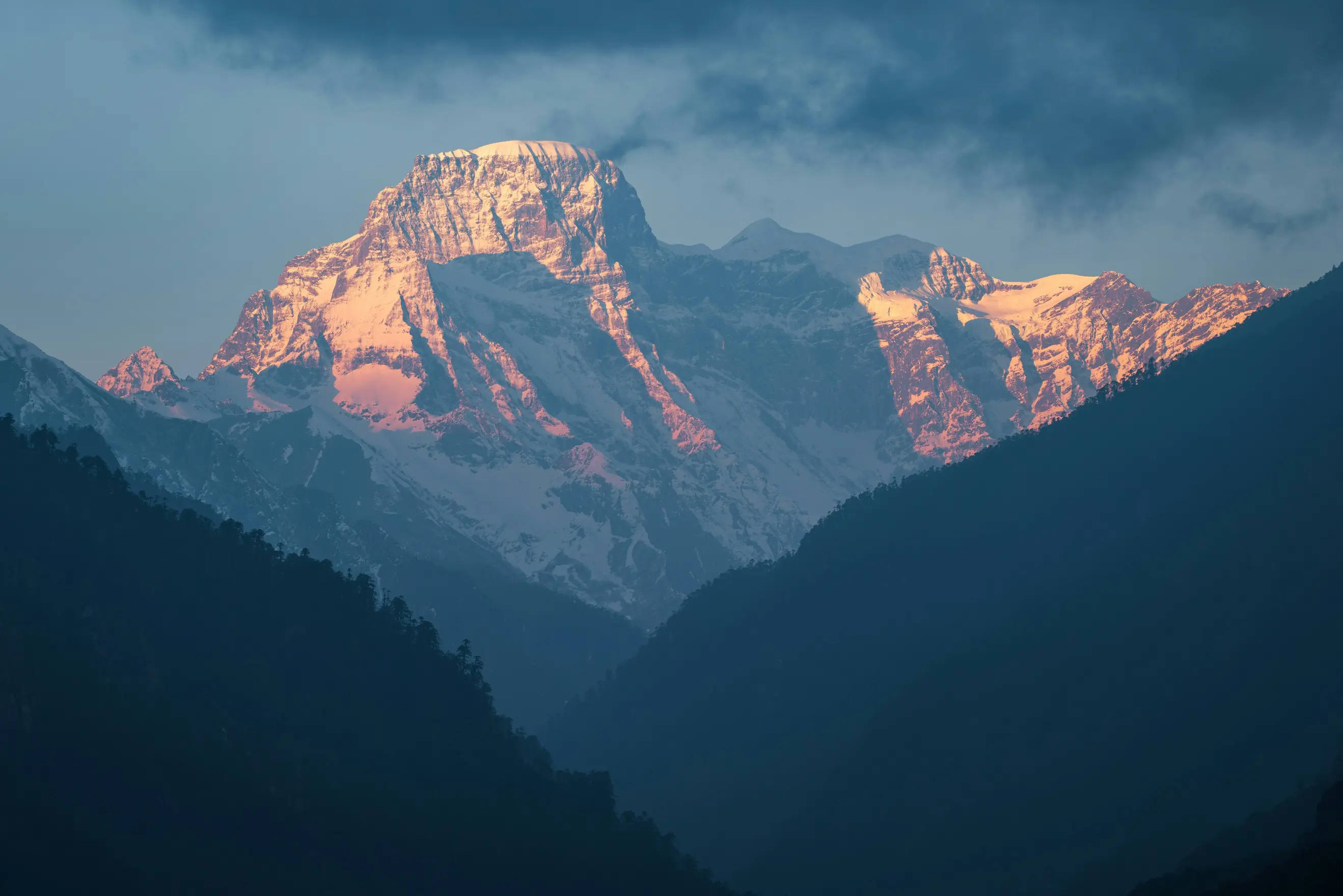
Our recommendation: October for the full package (clear skies, Thimphu Tshechu if dates align, early crane arrivals). December-January if Phobjikha's crane season is your priority. March-April if Paro Tshechu and spring rhododendrons matter more than cranes.
For detailed seasonal breakdowns, read our best time to visit Bhutan guide.
By Air: All arrivals and departures via Paro International Airport. Direct connections from Delhi, Mumbai, Kolkata, Kathmandu, and Bangkok with Drukair or Bhutan Airlines.
By Road: Phuntsholing is the main road entry from India—accessible from Siliguri, Darjeeling, and Sikkim. If you're traveling through India's northeast, a road-entry Bhutan trip is practical and LocalHi designs them regularly.
International tourists pay USD $100 per person per night as a government levy funding healthcare, education, and conservation. This is separate from accommodation and guide costs. Indian, Bangladeshi, and Maldivian nationals pay a different, lower levy.
All international tourists travel with a licensed Bhutanese guide. LocalHi manages guide arrangements and all logistics as part of your 9-day Bhutan journey.
Typical inclusions when booking through LocalHi:
Not included: International flights, travel insurance, alcohol, tips for guide/driver.

Bhutan pairs naturally with:
Paro's flight connections make combining straightforward—this itinerary begins and ends at Paro, which connects directly to Delhi, Kolkata, and Kathmandu.
Explore our full Bhutan destination page for more trip combinations.
Is 9 days the right length for a first visit to Bhutan?
Yes, for most travelers. It's the most complete introduction to Bhutan without requiring specialist interests to justify the duration. Five days covers the essentials (Paro and Punakha). Nine days covers the essentials and adds Thimphu and Phobjikha—the valley that most changes how people feel about the country. Most travelers who do 9 days say, on return, they wished they'd done 13. Most who do 5 say they wish they'd done 9.
Is Phobjikha Valley really worth the extra drive time?
Yes, without qualification. The drive from Punakha over the Black Mountains is part of the value: a section of Bhutan most visitors never see. The valley itself is unlike anything on the western circuit. In crane season (October-February) it's genuinely unmissable. Outside crane season it's still one of the most peaceful and least-touristed places in western Bhutan. The two nights there are not indulgent—they're the correct amount.
What is the best lodge in Phobjikha Valley?
Gangtey Lodge is the most highly-rated property on the entire western circuit. Twelve rooms, valley views from every terrace, fireplaces, positioned directly above the wetlands. Six Senses Gangtey and Amankora Gangtey are both excellent within their respective networks. If you can only make one deviation from a network stay, this valley is where to make it.
Can this itinerary include a Tshechu festival?
Yes, if your dates align. Paro Tshechu falls in March or April. Thimphu Tshechu falls in September or October. Both fall within the two best travel windows for this itinerary. We adjust the structure to build around the festival if timing allows—it doesn't require a different itinerary, just better coordination of dates.
How physically demanding is this 9-day Bhutan trip?
Moderate. Tiger's Nest is the most demanding element—900 meters of ascent over 2-4 hours. Horses can take you partway to a cafeteria viewpoint; the monastery itself requires climbing stairs. The Phobjikha valley walk is flat and gentle. Everything else involves comfortable walking between sites. The itinerary can be adjusted for different fitness levels without losing anything essential.
What happens if I want to add Bumthang to this itinerary?
You extend to 13 days. The 13-day Bhutan itinerary adds Bumthang—Bhutan's spiritual heartland, the valley where the country's Buddhist history is most concentrated—and completes the full western and central circuit. Both Amankora and Six Senses designed their lodge networks around this 13-day duration as their full five-property journey.
Can I do this itinerary from India by road instead of flying?
Yes. Enter Bhutan via Phuntsholing (road border from Siliguri/Darjeeling/Sikkim), drive to Paro/Thimphu, complete the western circuit, and either exit via Phuntsholing or fly out from Paro. Road entry adds 1-2 days but eliminates Paro flight costs and works well for travelers already in Northeast India or West Bengal.
When should I book my 9-day Bhutan trip?
3-6 months ahead for October-November and March-April (peak seasons). 2-3 months ahead for December-February. Lodge availability—especially at Gangtey Lodge, Amankora, and Six Senses properties—books first during peak crane season (December-January) and festival periods (Paro Tshechu in March/April, Thimphu Tshechu in September/October).
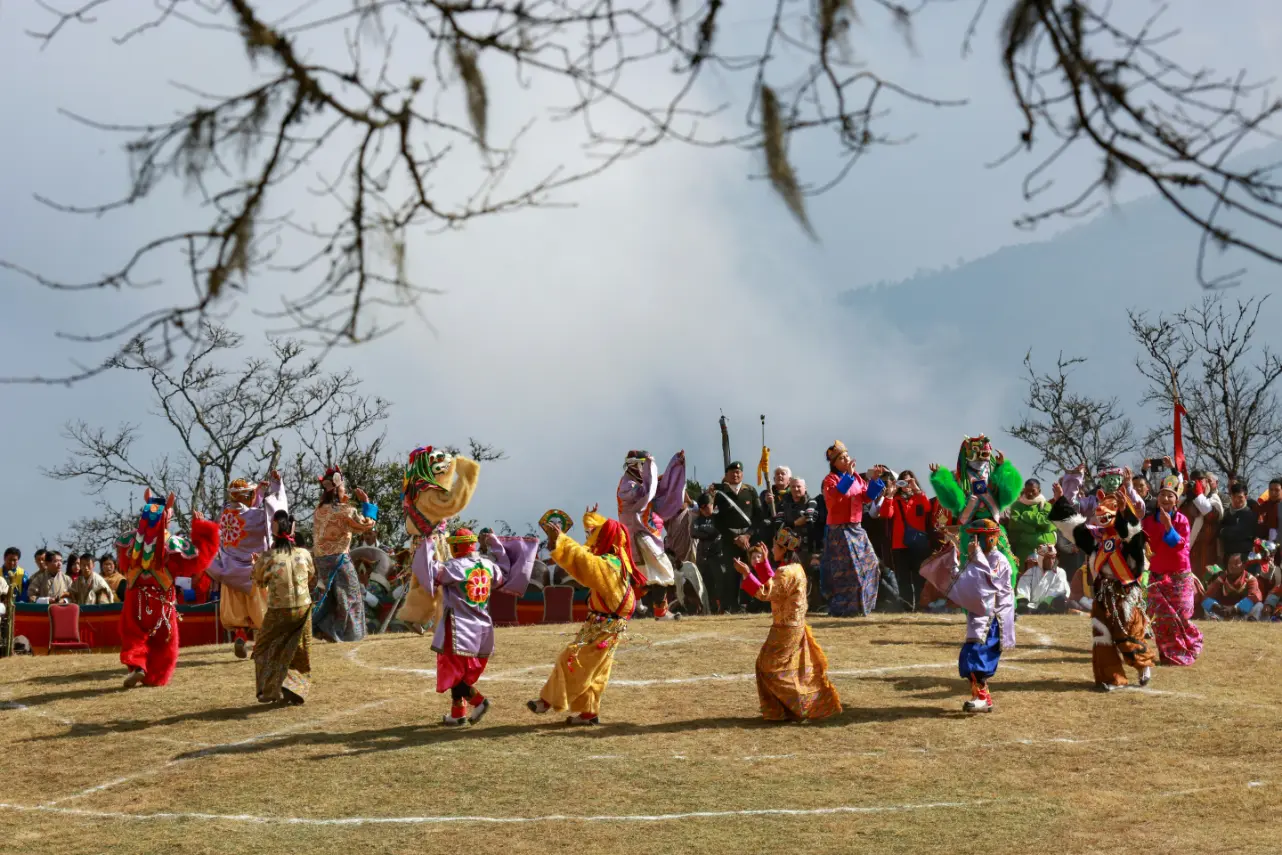
Nine days is the duration that returns travelers to Bhutan. Not because it's incomplete, but because four valleys open a country that a first visit only introduces.
Browse the full Bhutan Explored 9-Day Journey for detailed pricing and inclusions. If you're weighing this against the shorter option, read our 5-day itinerary guide to understand exactly what each duration includes. For the complete country circuit, explore the 13-day journey that adds Bumthang.
Ready to plan your trip? Contact us with your travel dates and we'll design your Bhutan itinerary around them.
CURATED TOP DESTINATIONS


Subscribe for more updates!
Get exclusive travel inspiration, private itinerary ideas, and
curated destination guides from LocalHi's travel designers.